
Antoni Guadi i Cornet, 25 June 1852 – 10 June 1926 was a Catalan architect and designer from Spain, known as the greatest exponent of Catalan Modernism. Gaudi’s works have a highly individualized, sui generis style.
Gaudi’s work was influenced by his passions in life: archetecture, nature and religion. He considered every detail of his creations which he integrated into his architecture crafts such as ceramics, stained glass, wrought ironwork forging and carpentry. He also introduced new techniques in the treatment of materials, such as trencadis which used waste ceramic pieces.
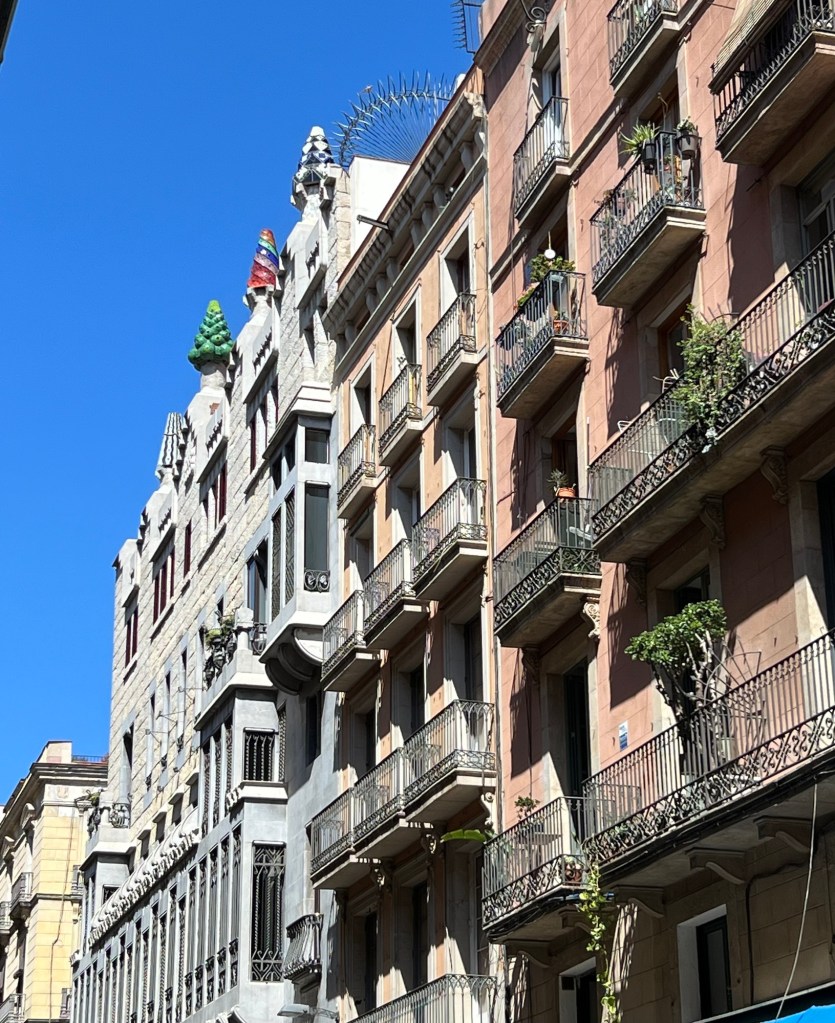
The Palau Guell is a mansion designed by Gaudi for the industrial tycoon Eusebi Guell, and was built between 1886 and 1888 in the El Raval neighborhood of Barcelona. it is part of the UNESCO World Heritage Site “Works of Antoni Gaudi”

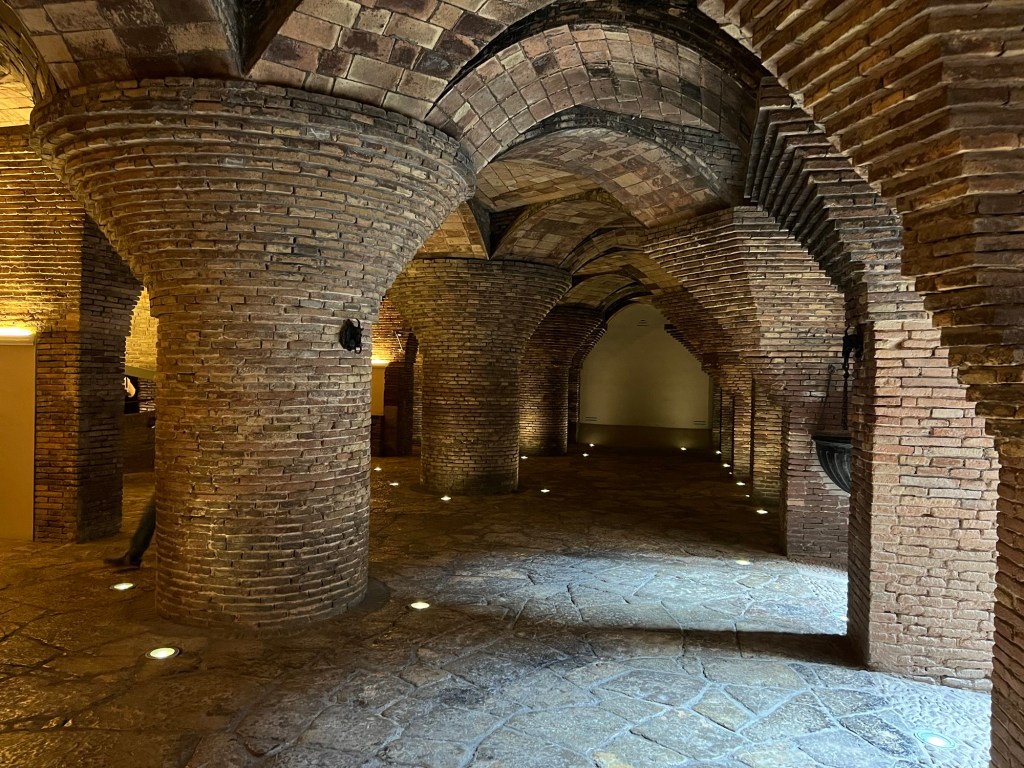
The carriage level – Guests entered the home in horse-drawn carriages through the front iron gates, which featured a parabolic arch and intricate patterns of forged ironwork.
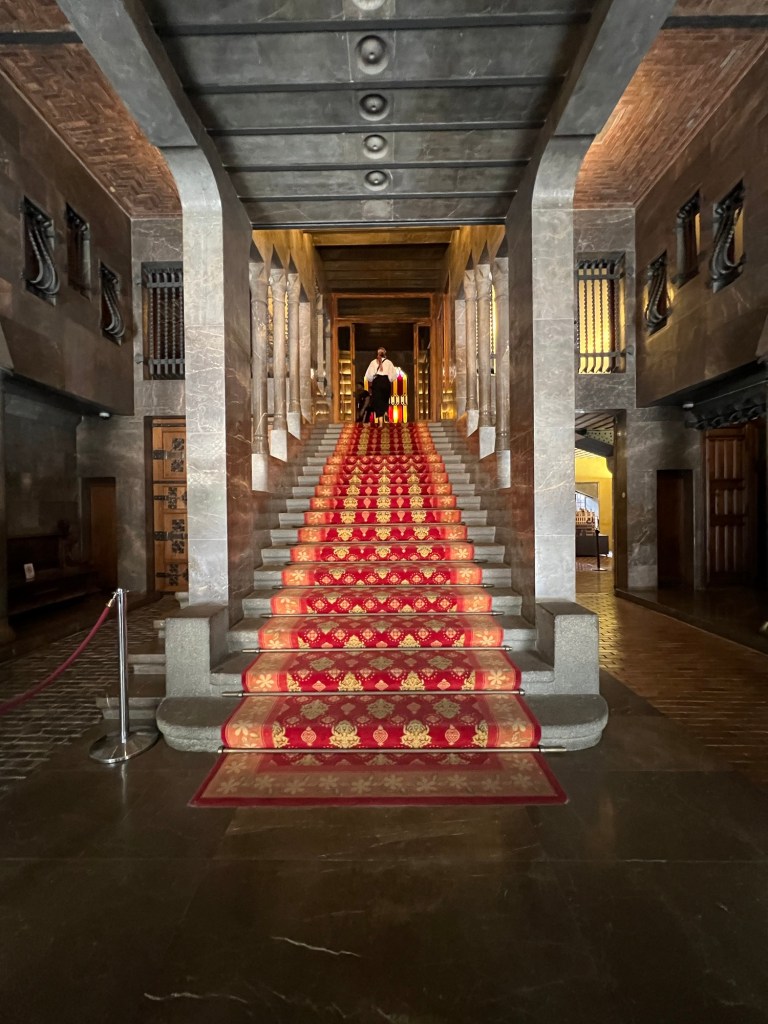
Main entrance
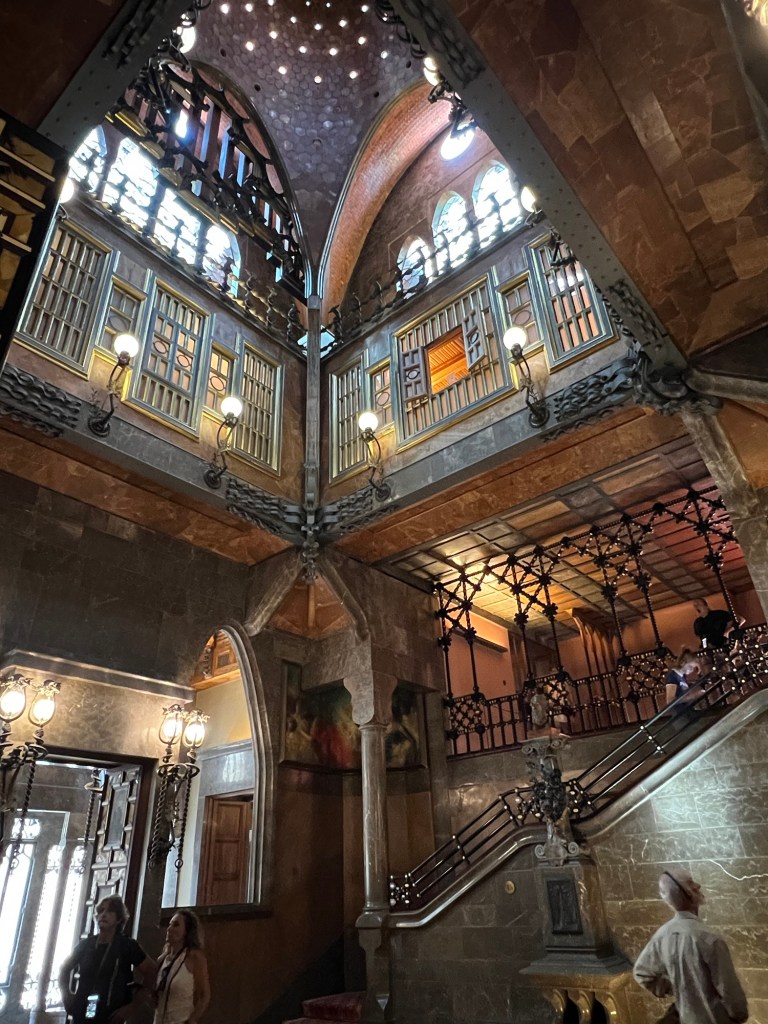
The main party room has a tall ceiling with small holes near the top where lanterns were hung at night, from the outside, to give the appearance of a starlit sky.
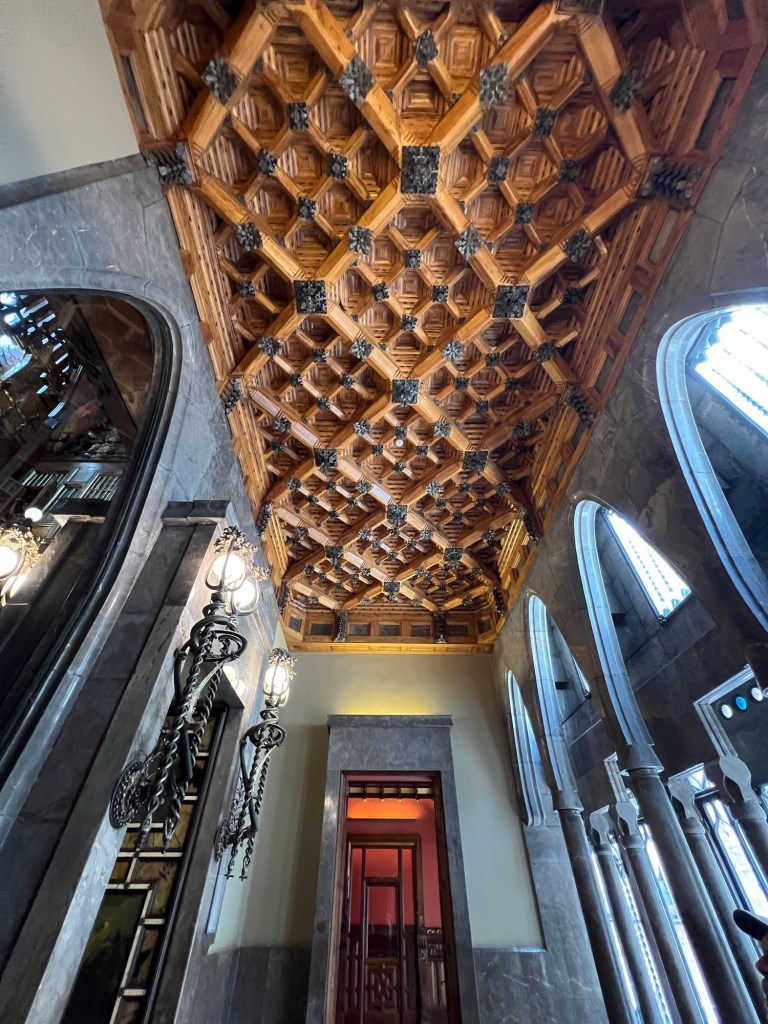
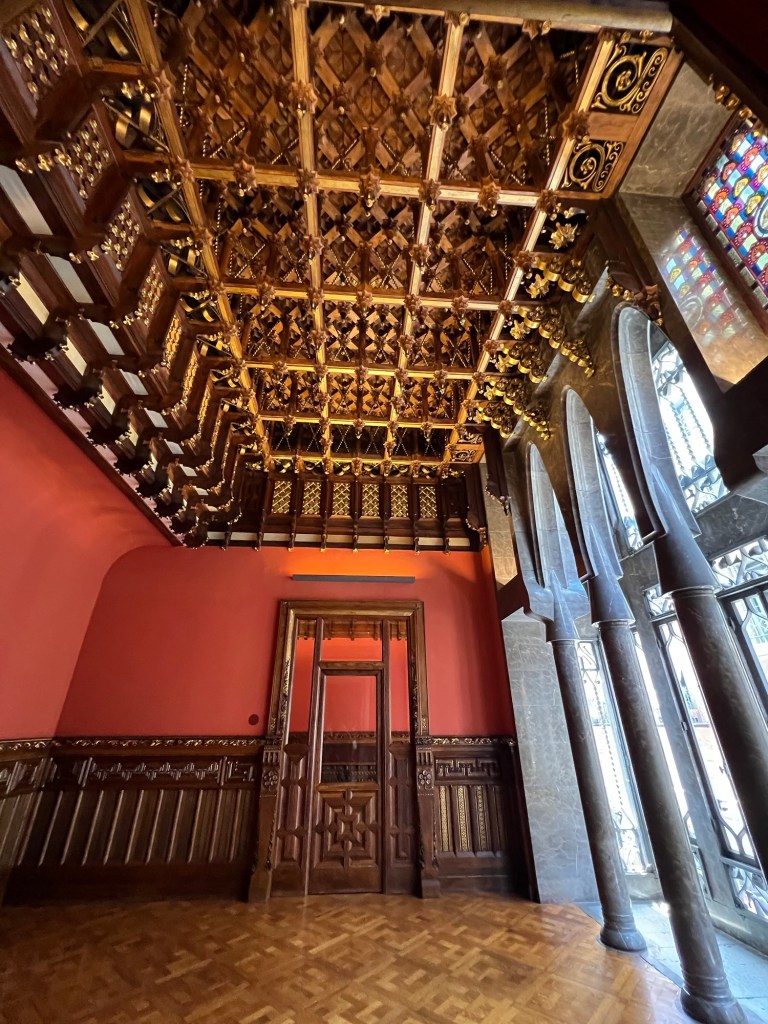
The Red Room
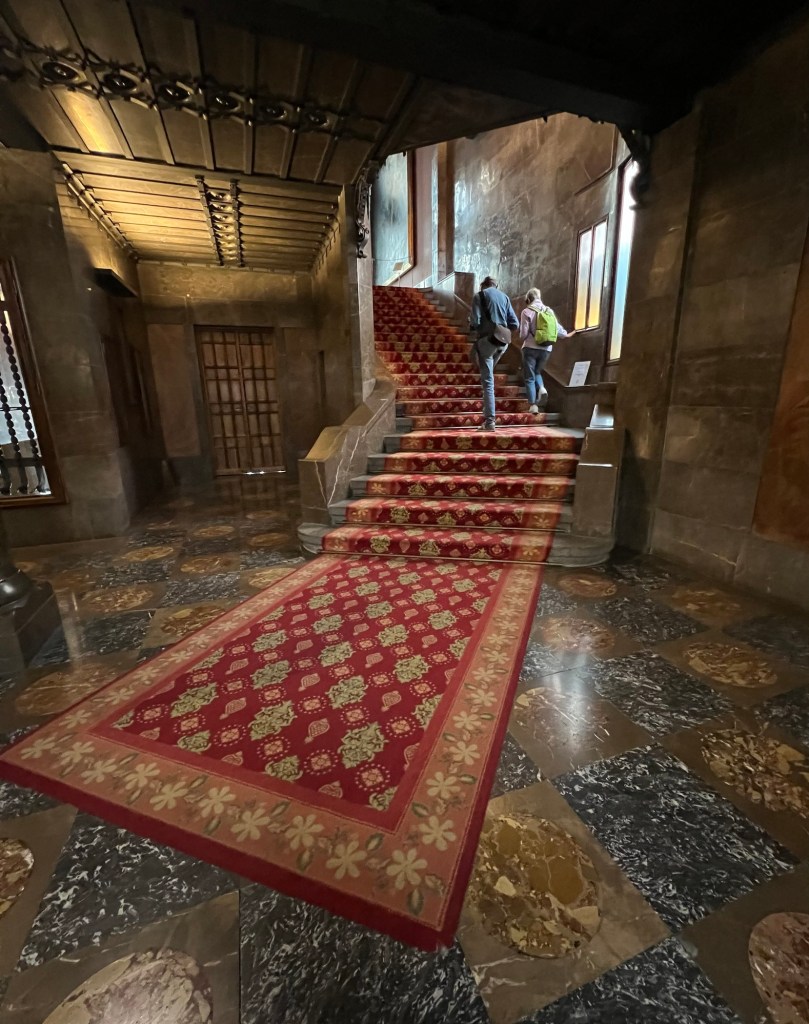
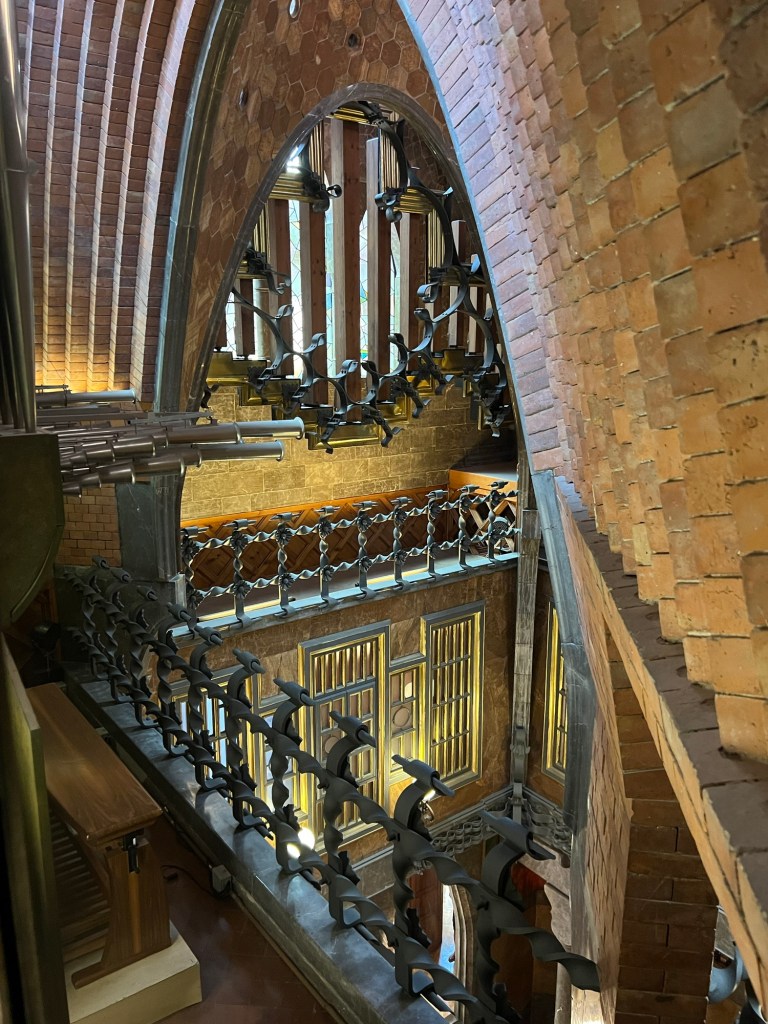
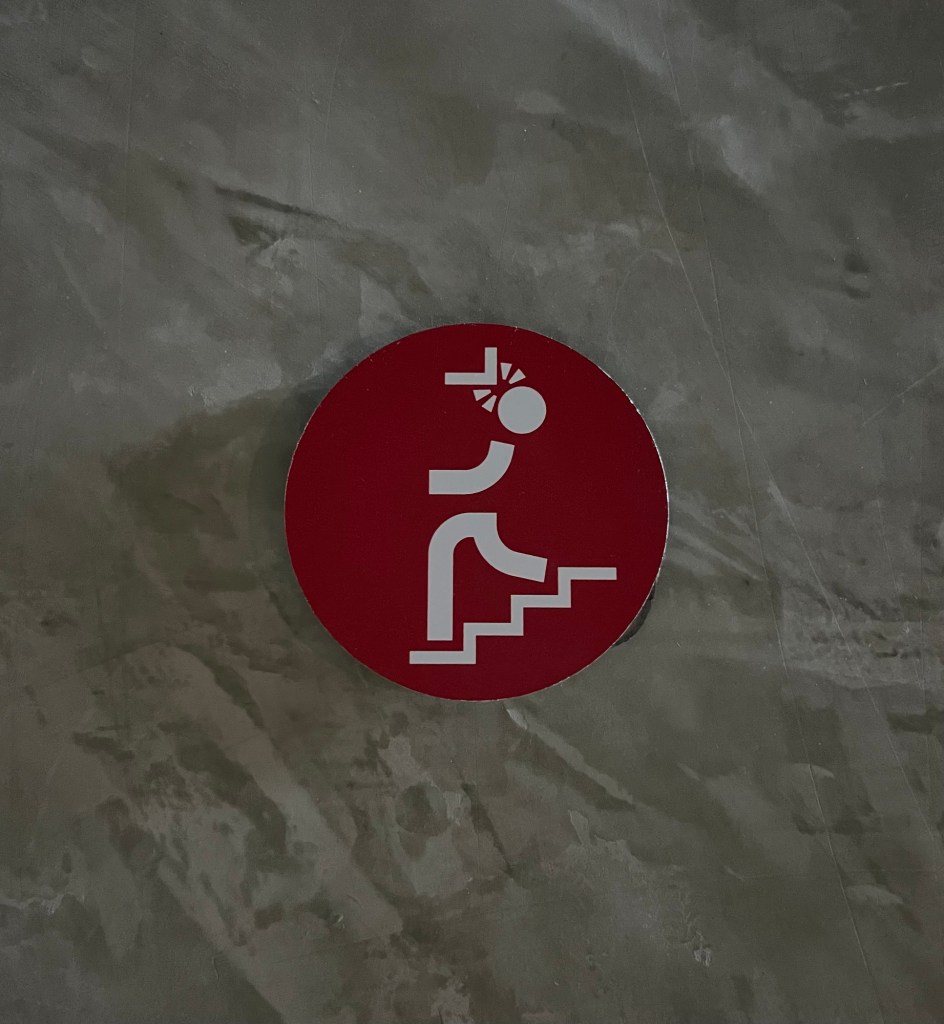
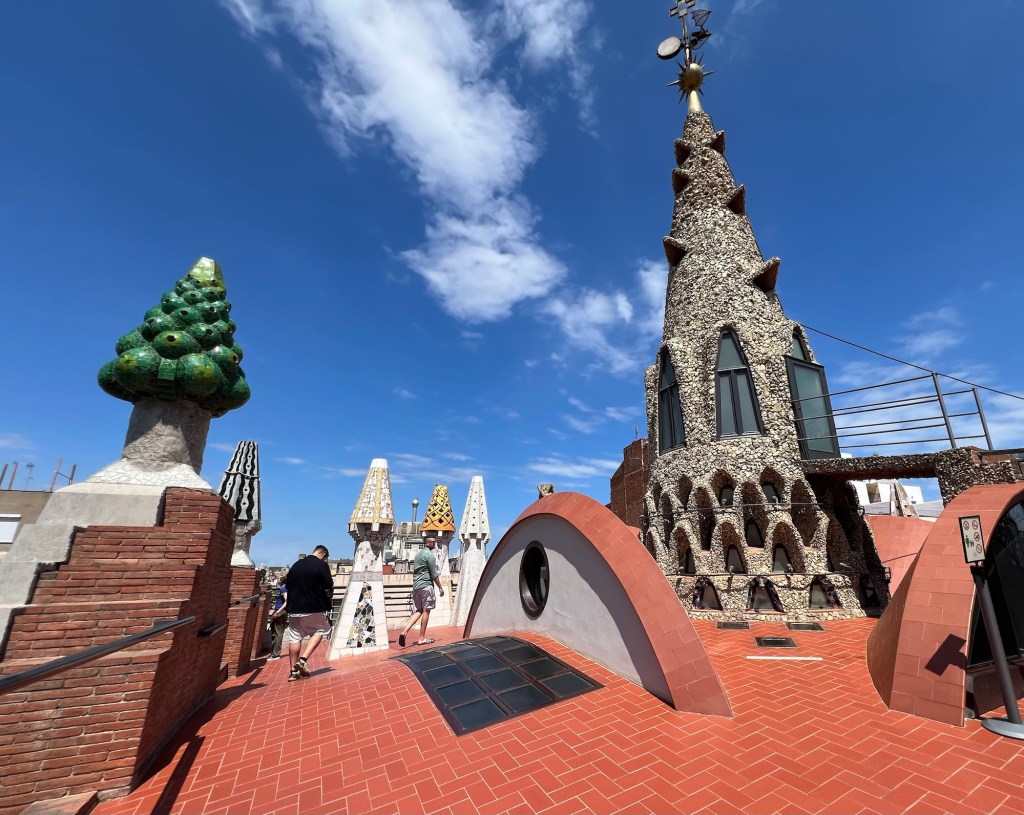
6 floors up up
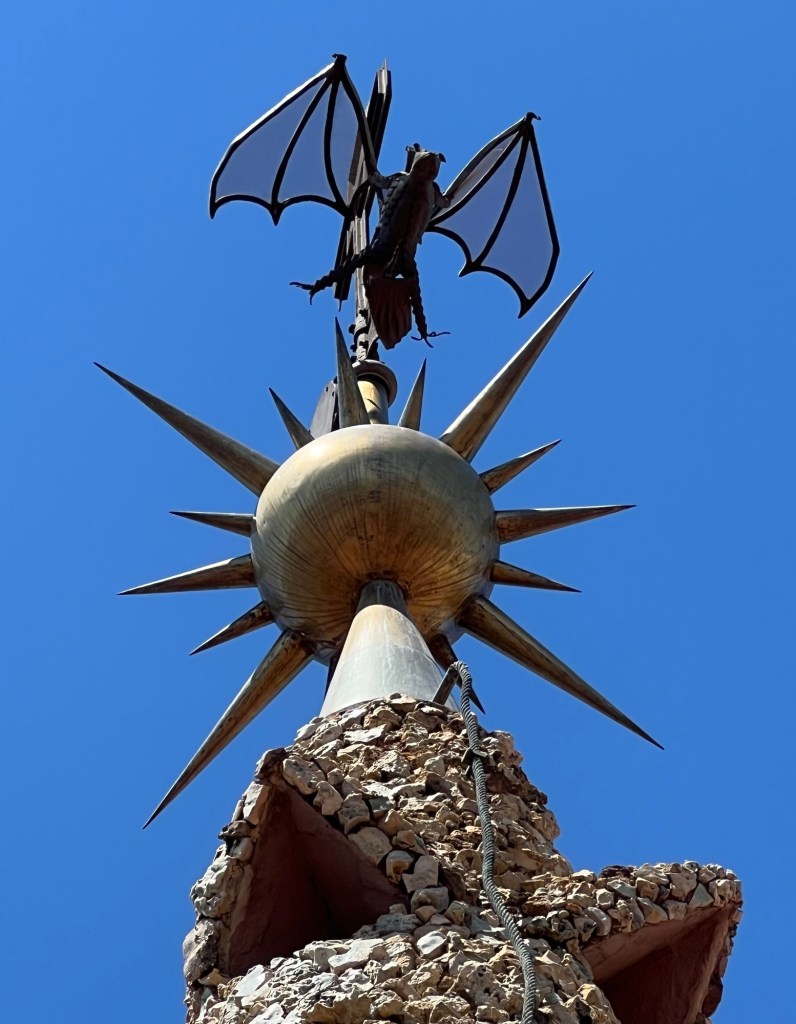
The bat is still on the coat of arms for lots of Catalan speaking cities in Spain.

landscape
Sagrada Familia is the largest unfinished Catholic church in the world. The styles of Architects Antoni Gaudi and Francisco de Paula del Villar are Gothic Revival, Art Nouveau and Modernista. Groundbreaking was 19 March 1882… that’s right, 142 years ago!
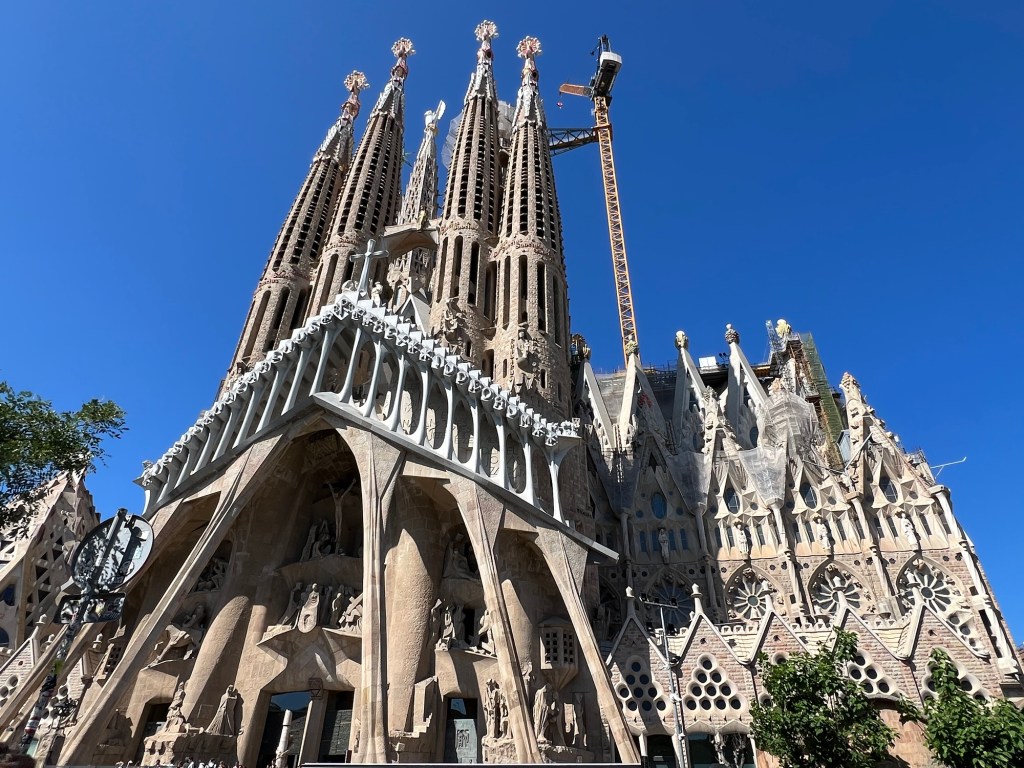
Gaudi devoted the remainder of his life to the project and he is buried in the church’s crypt. At the time of his death in 1926, less than a quarter of the project was complete.

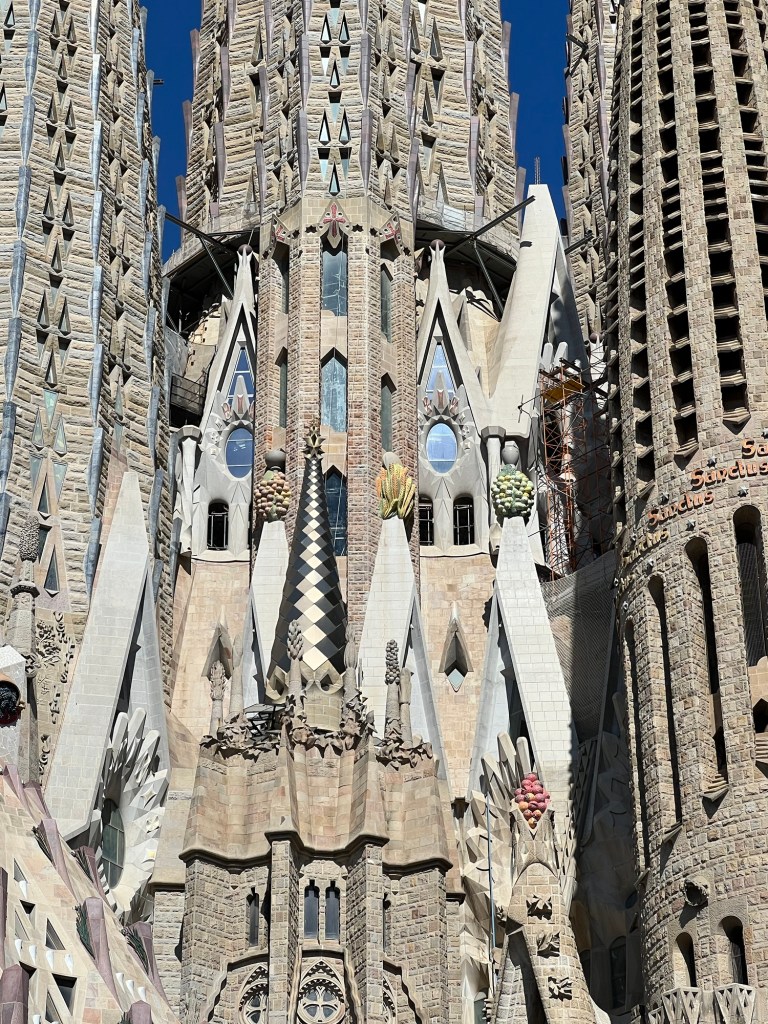
Relying solely on private donations, Sagrada Familia’s construction progressed slowly and was interrupted by the Spanish Civil War. In 1939, Francesc de Paula Quintana took over site management, which was able to go on with the material that was saved from Gaudi’s workshop and that was reconstructed from published plans and photographs.
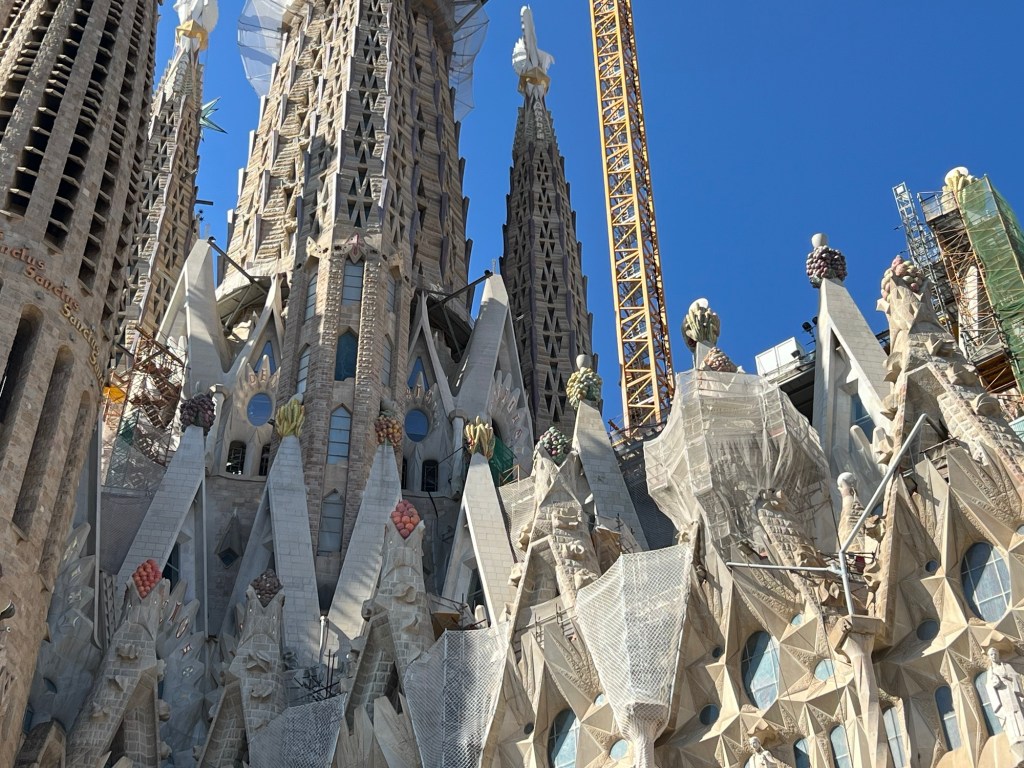
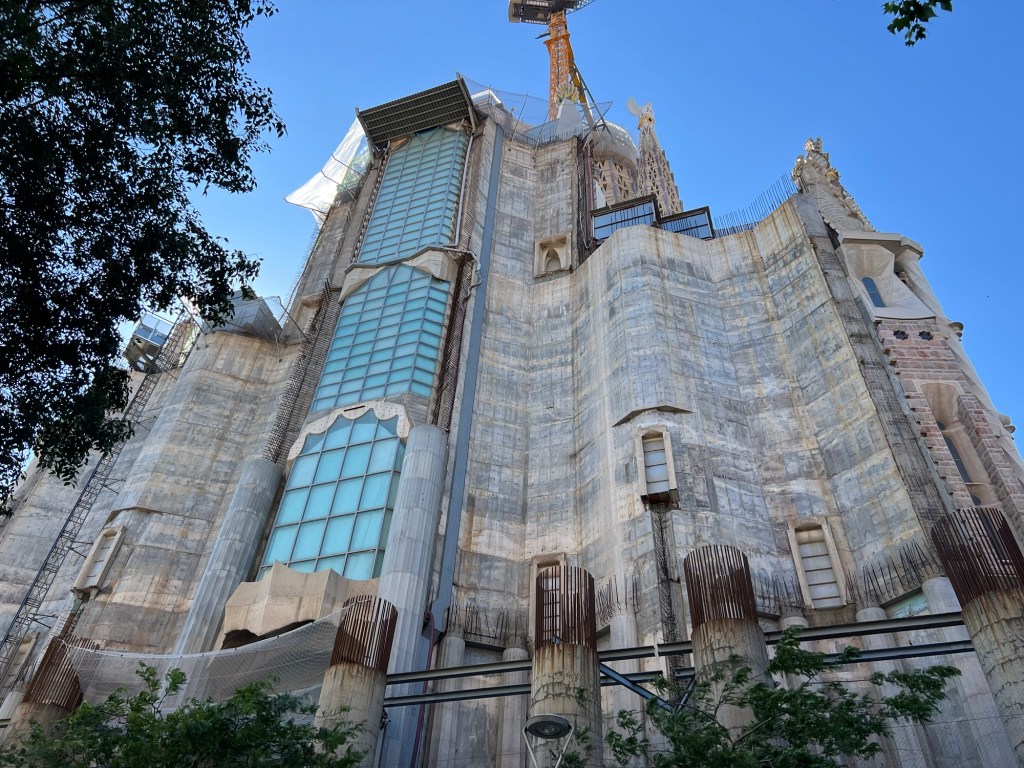
In March 2024, an updated forecast reconfirmed a likely completion of the building in 2026, though the announcement stated that work on sculptures, decorative details and a controversial proposed starirway leading to what will eventually be the main entrance is expected to continue until 2034.
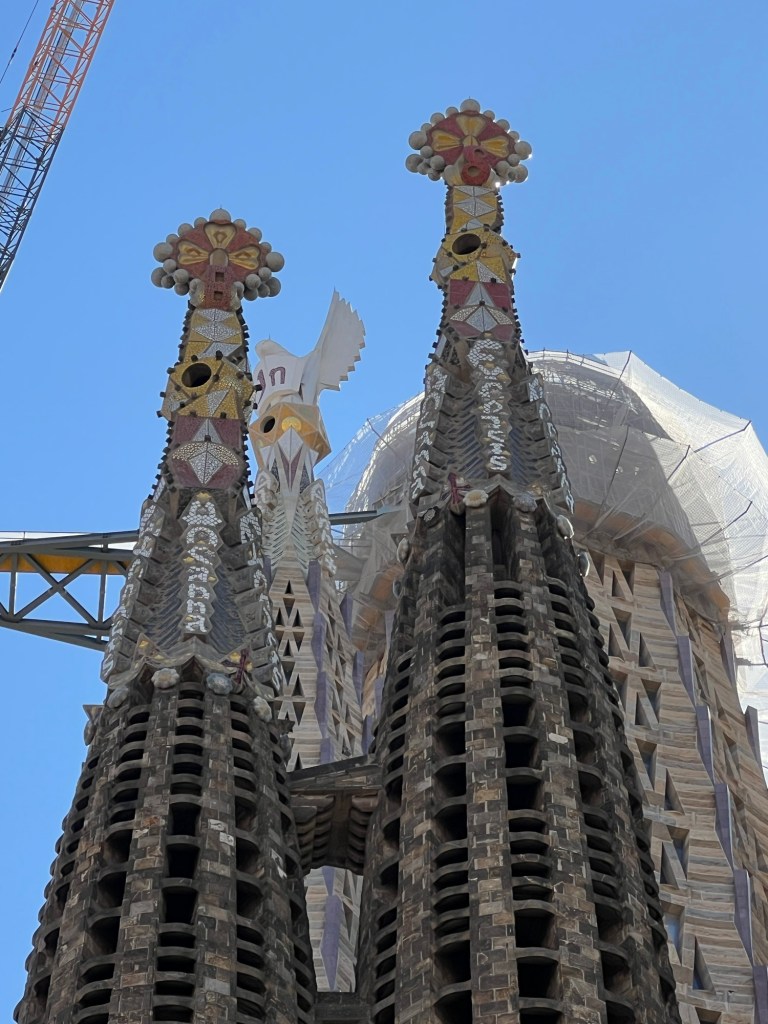
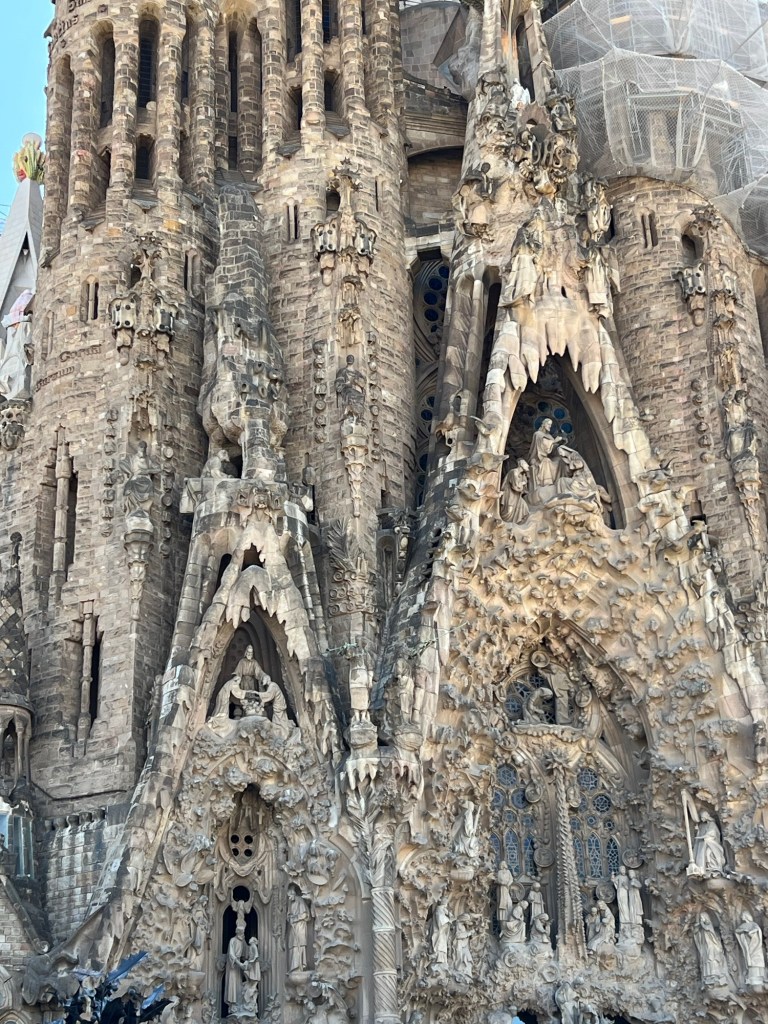
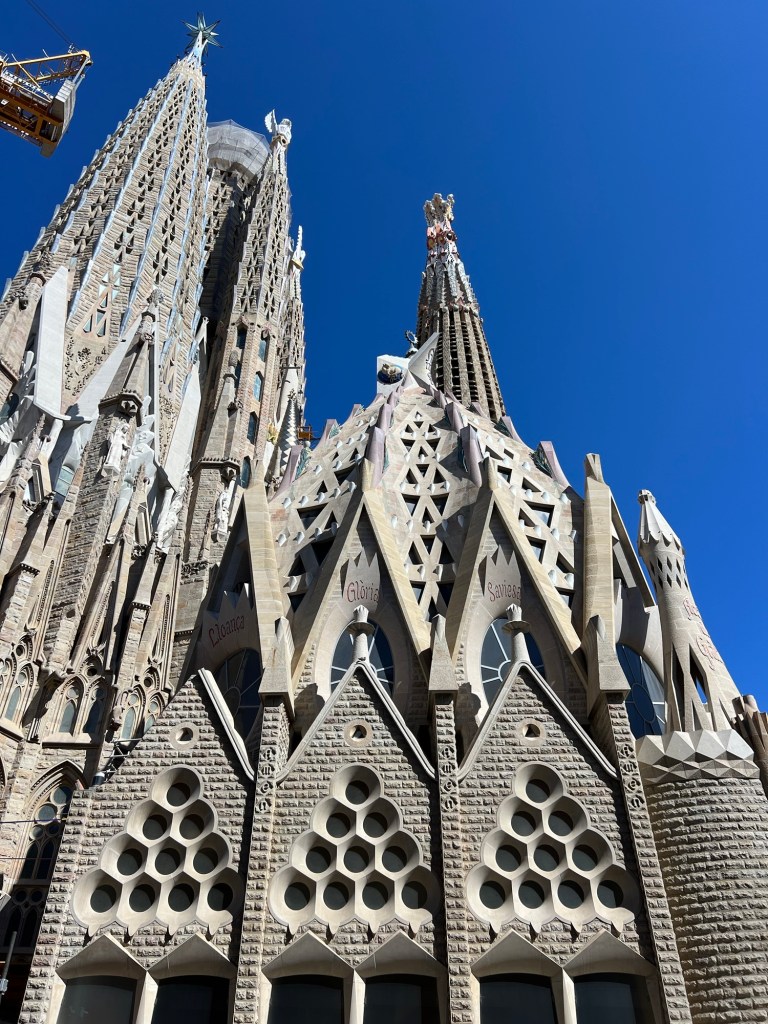
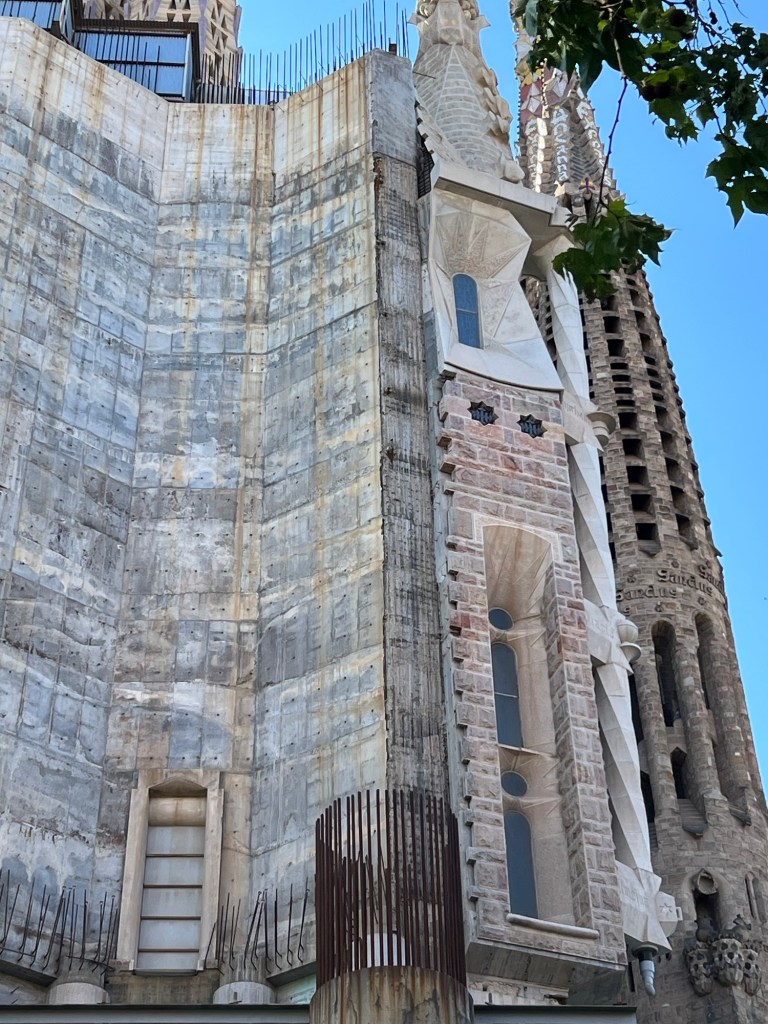
Still so much work to be done
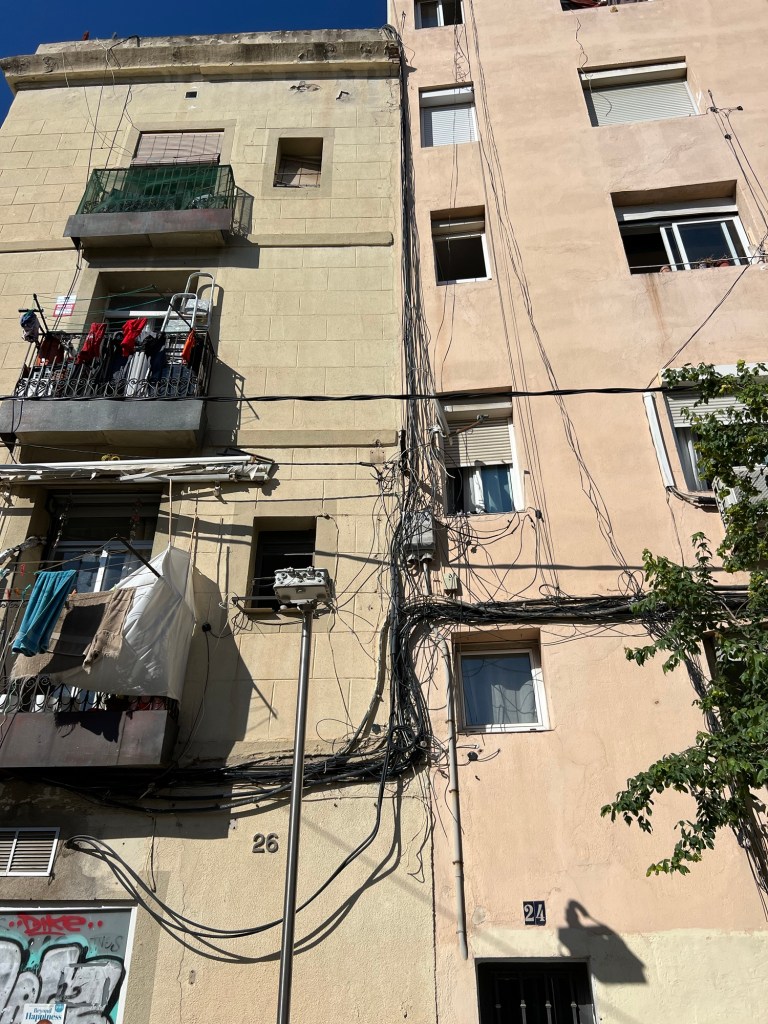
And elsewhere in Barcelona there is relaxed wiring
 Tea with Tanner ...somewhere
Leave a comment