
Coordinating military strategy
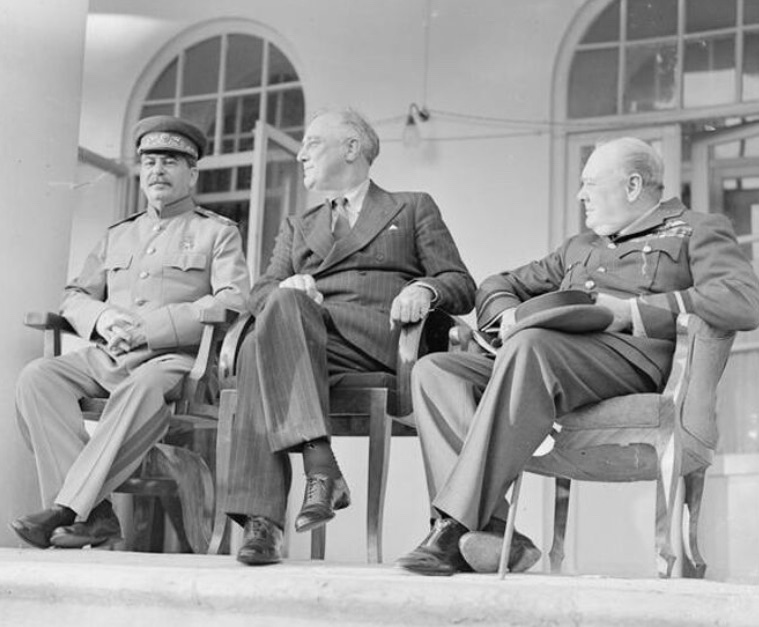
The most important subject discussed at the Tehran Conference in November 1943 by the Allied ‘Big Three’ was the nature and timing of the launch of a ‘second front’ in North West Europe, code named ‘Overlord’, against the Axis powers led by Germany, Italy and Japan.
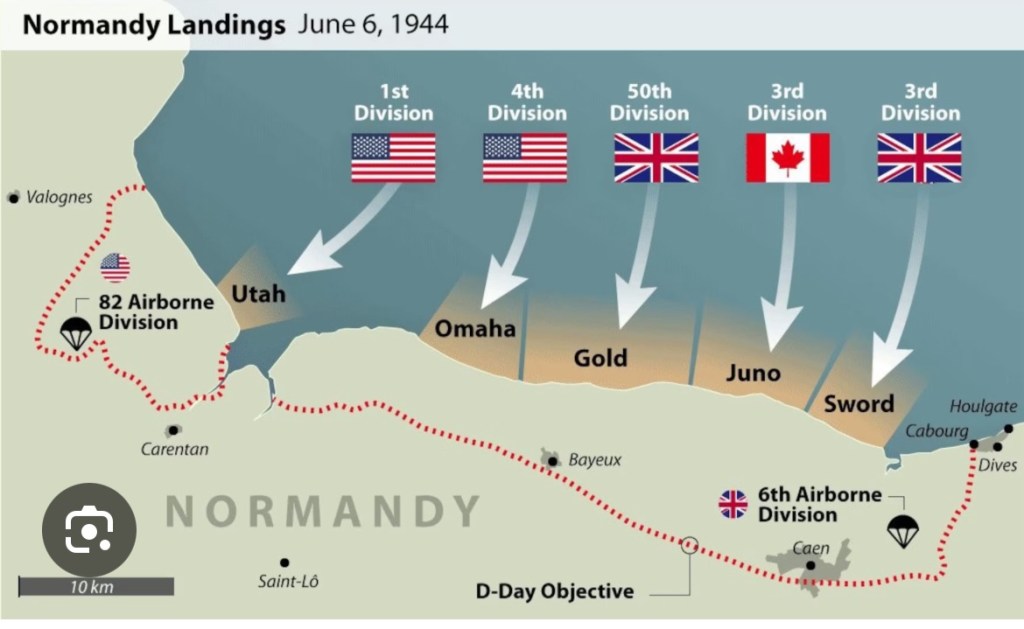
On 6 June 1944 the Allies unleashed their much anticipated attack on German occupied Europe with landings in Normandy. The Allies had begun, in 1943, top-secret planning for their invasion of western Europe, code-named Operation ‘Overlord’. They built up reserves of soldiers and supplies and even devised artificial harbours. Double agents delivered false information to reinforce this deceit both before and after the Normandy landings. An elaborate deception operation hid their true intentions. Operation ‘Overlord’ was vast in scale. It involved over 150,000 troops, nearly 12,000 aircraft and 7000 naval vessels.

These strips of paper backed with foil, that were code-named WINDOW, were dropped by allied aircraft to confuse and jam enemy radar the night before D-Day
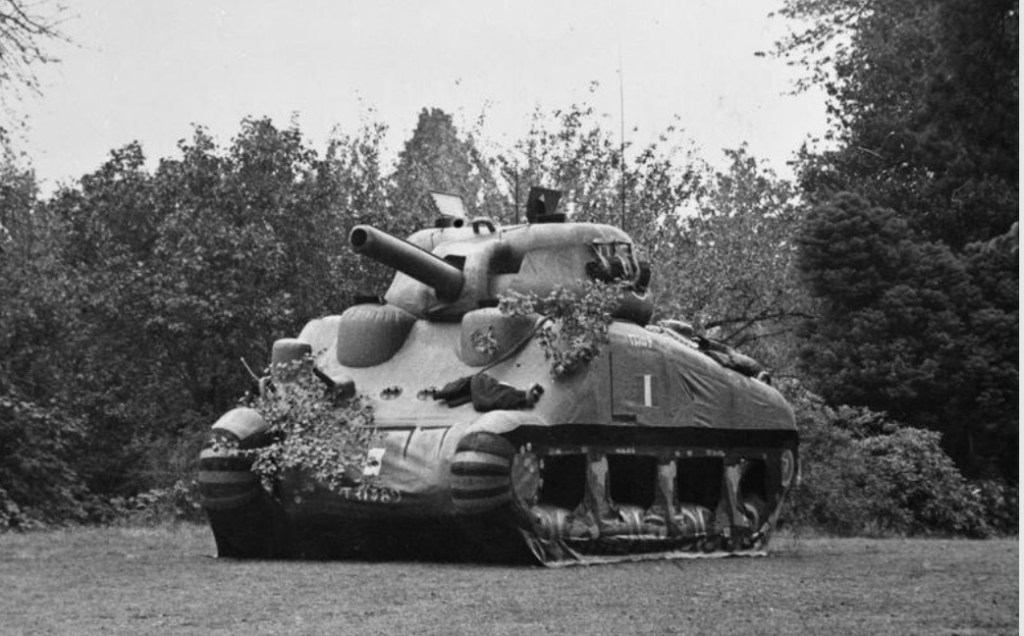
The Germans knew that at some stage the Allies would launch a cross Channel invasion but they were unsure of exactly where or when it would take place. As a crucial part of their preparation for D-Day the Allies developed a deception plan to draw attention away from Normandy. Real tanks were replace by dummy tanks when they were moved from their holding areas. The inflatable decoys made the Germans think the Allies had more tanks than they actually did. Fake radio traffic, Operation Fortitude, lead the Germans into expecting an attack on Norway. On the night of 5-6 June, as part of Operation ‘Titanic’, the RAF dropped dummy paratroopers over Le Havre and Isigny to simulate an airborne invasion and draw German forces away from key objectives.
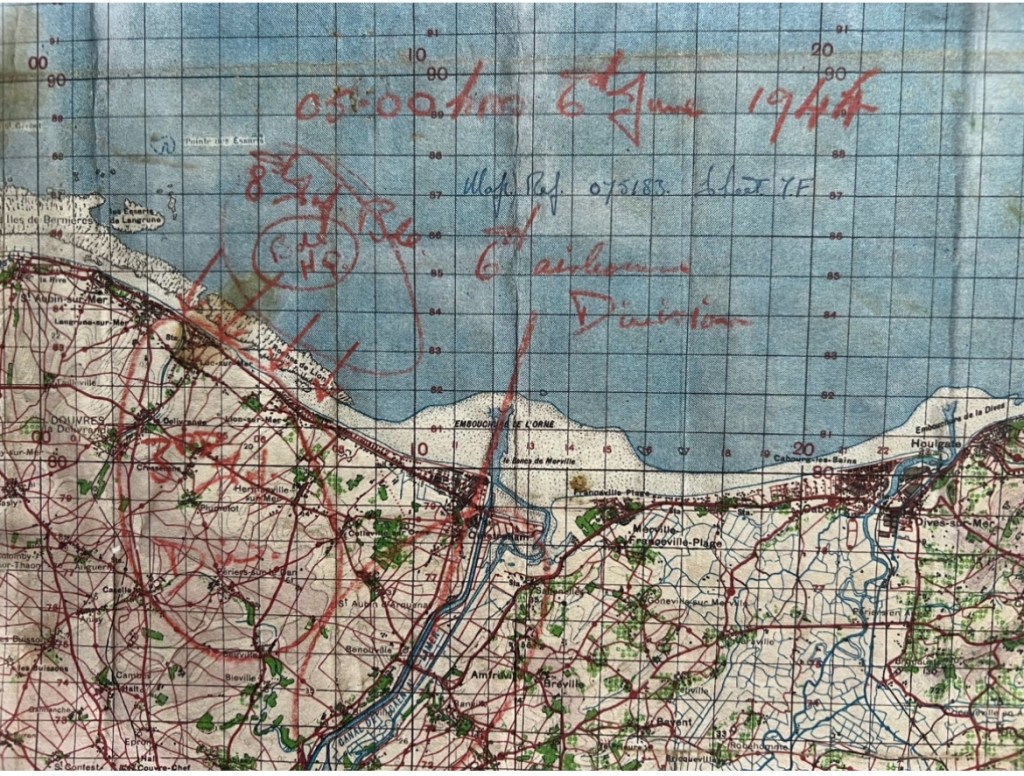
Shortly after midnight, on 6 June, over 18,000 well trained and highly skilled paratroopers and glider-borne infantry of the US 82nd and 101st Airborne Divisions and the British 6th Airborne Division were dropped into Normandy. The allied forces landed troops on Normandy beaches for the largest amphibious assault in History.
Operation Overlord 6 June – 30 August 1944 resulted in Allied victory and start of the lIberation of France.
Reflections 80 years later
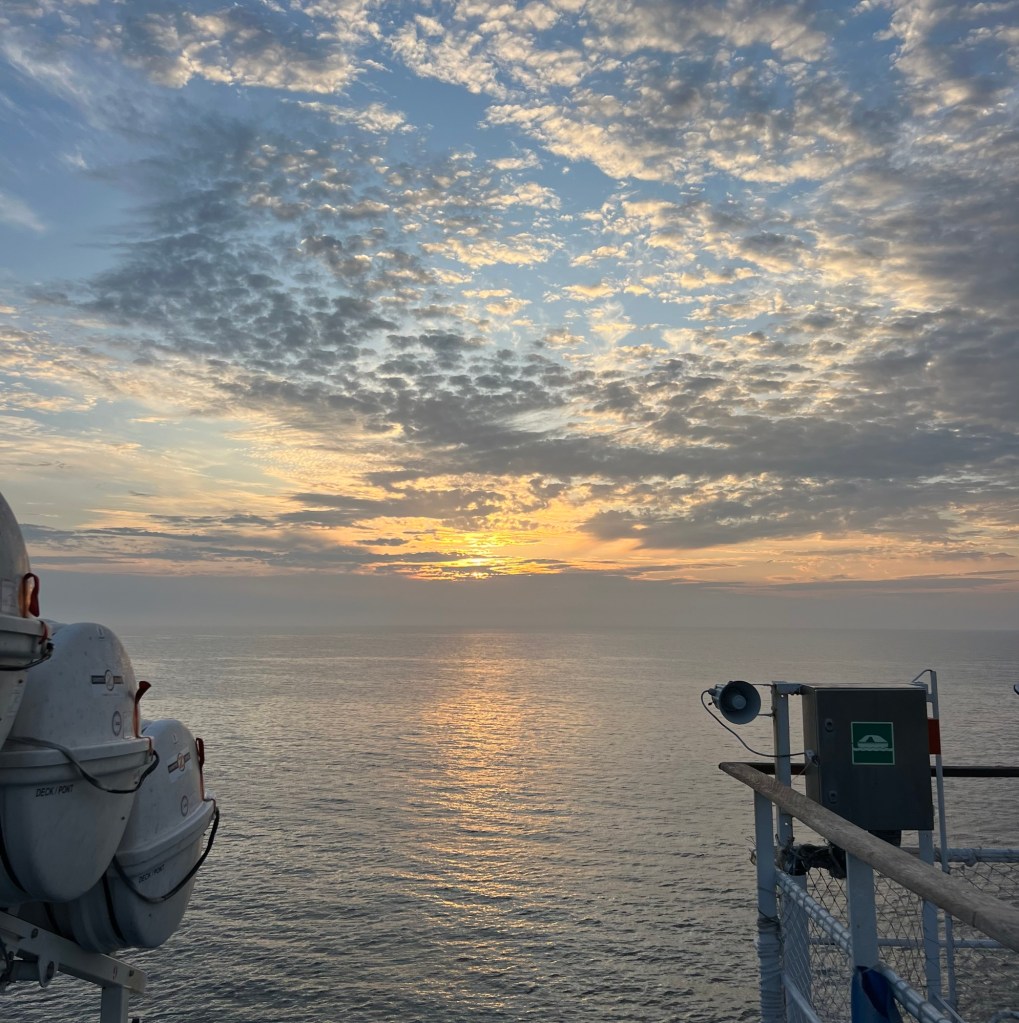

The target 50 mile (80 km) stretch of the Normandy coast was divided into five sectors; Utah, Omaha, Gold, Juno and Sword. Strong winds blew the landing craft east of their intended positions and the men landed under heavy fire from gun emplacements overlooking the beaches; the shore was mined and covered with wooden stakes, metal tripods and barbed wire. Casualties were heaviest at Omaha, with its high cliffs.
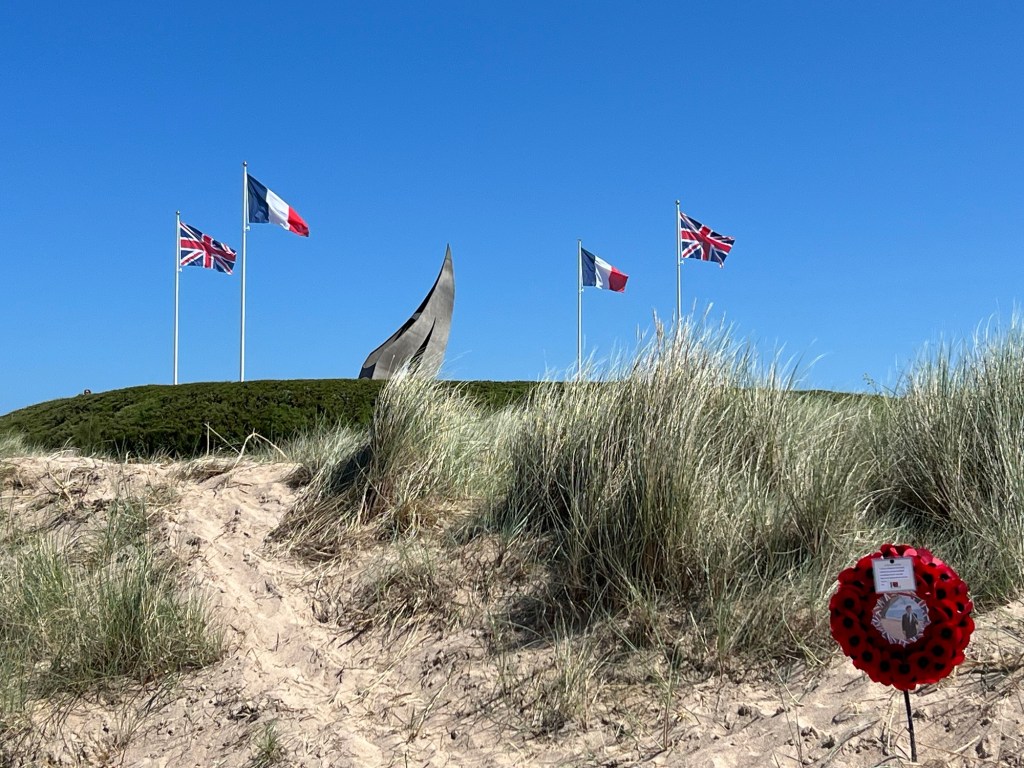

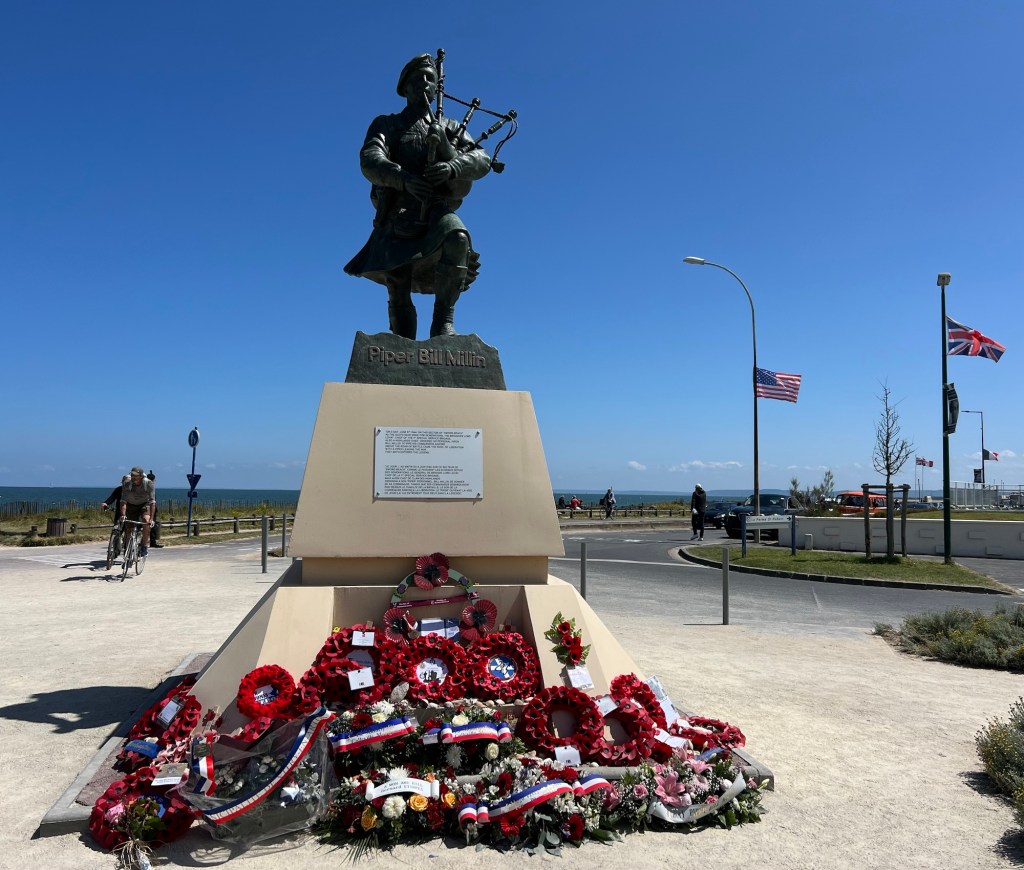
On D-Day, on this section of Sword Beach, the Brigadier Lord Lovat, Chief of the 1st Special Service Brigade, ordered his personal piper, Bill Millin, to pipe his commandos ashore. To the sound of Millin’s bagpipes, the commandos later marched across Pegasus Bridge. One D-Day veteran, Tom Duncan, recalled, ‘I shall never forget hearing the skirl of Bill Millin’s pipes. It gave us a great lift and increased our determination’. Millin was ‘just trusting to luck that I did not get hit’ and stated that he later talked to captured German snipers who claimed they did not shoot at him because they thought he had gone mad.

To commemorate the action of the 2nd (Airborne) Bn Oxfordshire and Buckinghamshire Light Infantry who captured Pegasus Bridge on the night of 5/6 June 1944
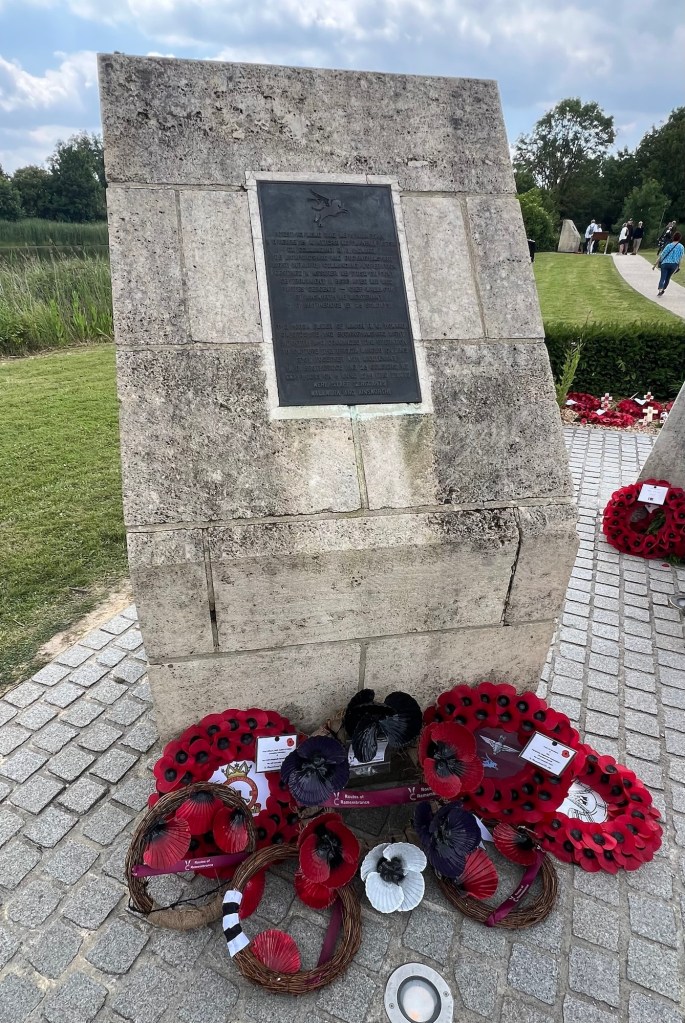
Six Horsa gliders carried the troops who led the attacks on the Orne River bridges of Horsa and Pegasus. Operation ‘Deadstick’ was entrusted to the 6th Airborne Division. Major Howard’s men secured the bridges and held their postions while waiting for reinforcement.
Staff Sergeant Roy Howard – Glider Pilot Regiment.
‘As a glider pilot, my objective was a small corner of a particularly tiny field of rough pasture close to the Orne Bridge. If I overshot, I would crush us all against a 14 foot high embankment – if I undershot i would destroy my seven tons of powerless aircraft and its human cargo on a belt of 50 foot high trees. There was simply no room for error. …It was absolutely vital that we had the maximum surprise element so we were going to sneak in just after midnight, some six and a half hours before the seaborne invasion came ashore. …We’d met the Ox and Bucks lads a few days before and they were a very good bunch. However, on the night they arrived all blacked up, loaded with arms and ammunition, they looked a right bunch of cut-throats – I think I was more aftrad of them than I was of the Germans. …At about twenty to eleven …somebody fired the green flare, the engines started and one by one we got under way.’
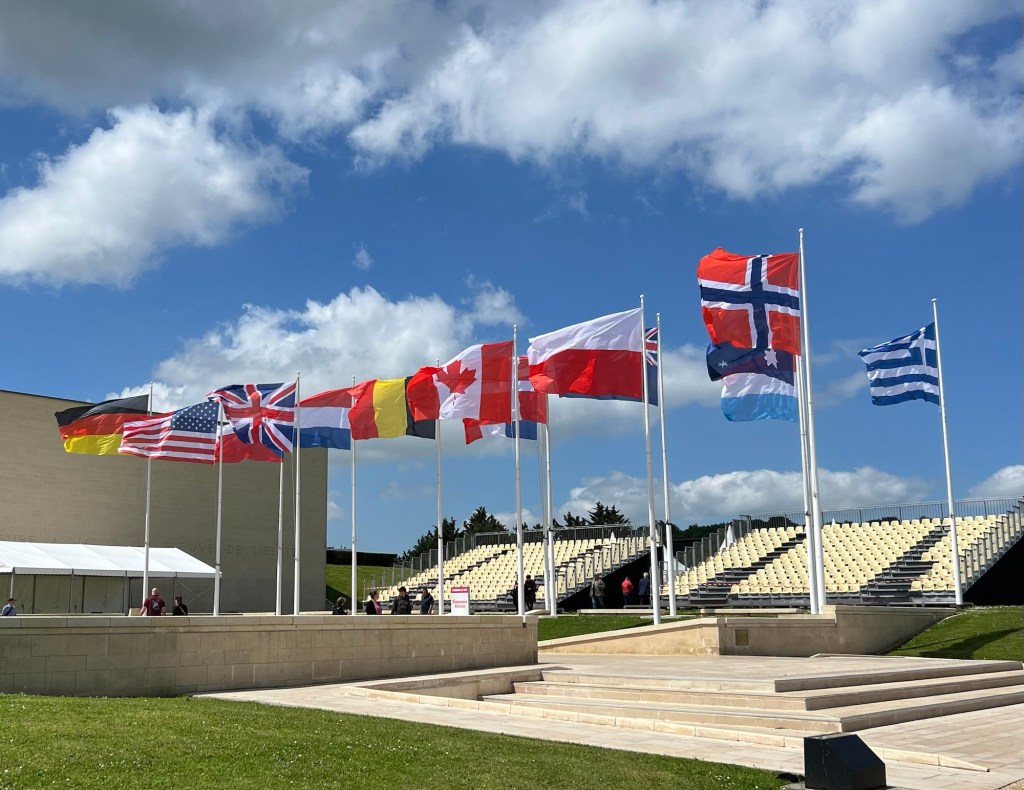
Caen was the main objective for the British 3rd Infantry Division that landed on Sword Beach. During Operation Charnwood the British and Canadian troops reached the bridges of the Orne on 9th July. At dawn on 18 July 6,000 tons of bombs were dropped over eastern Caen. The town was entirely liberated on 19 July 1944.
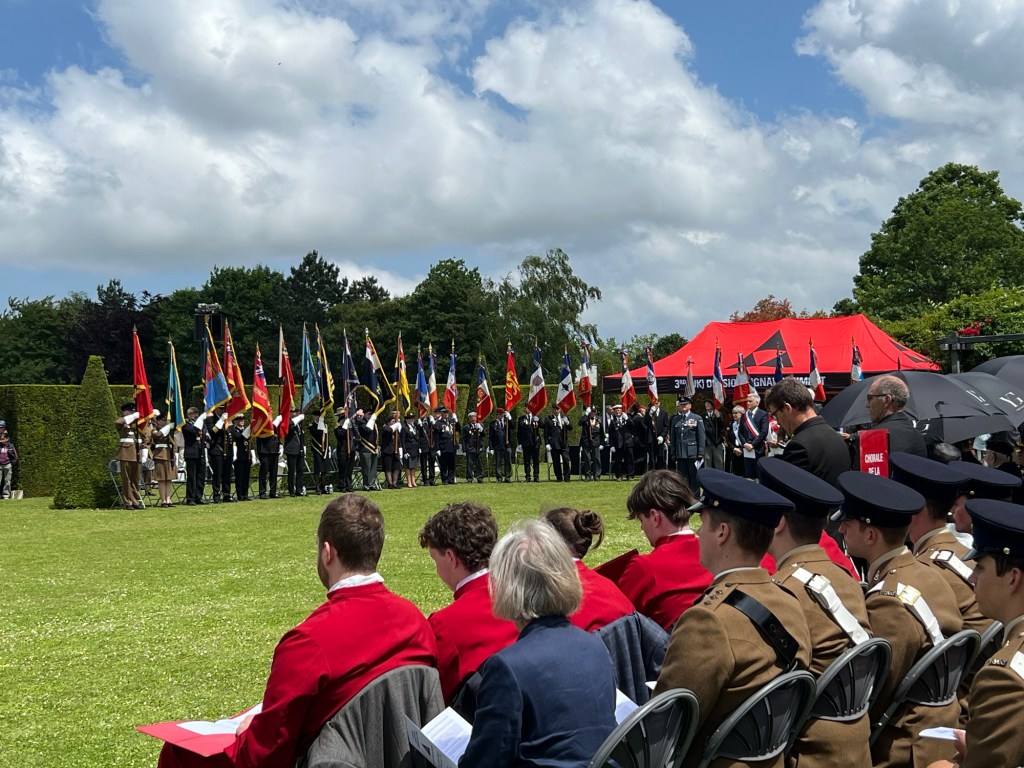
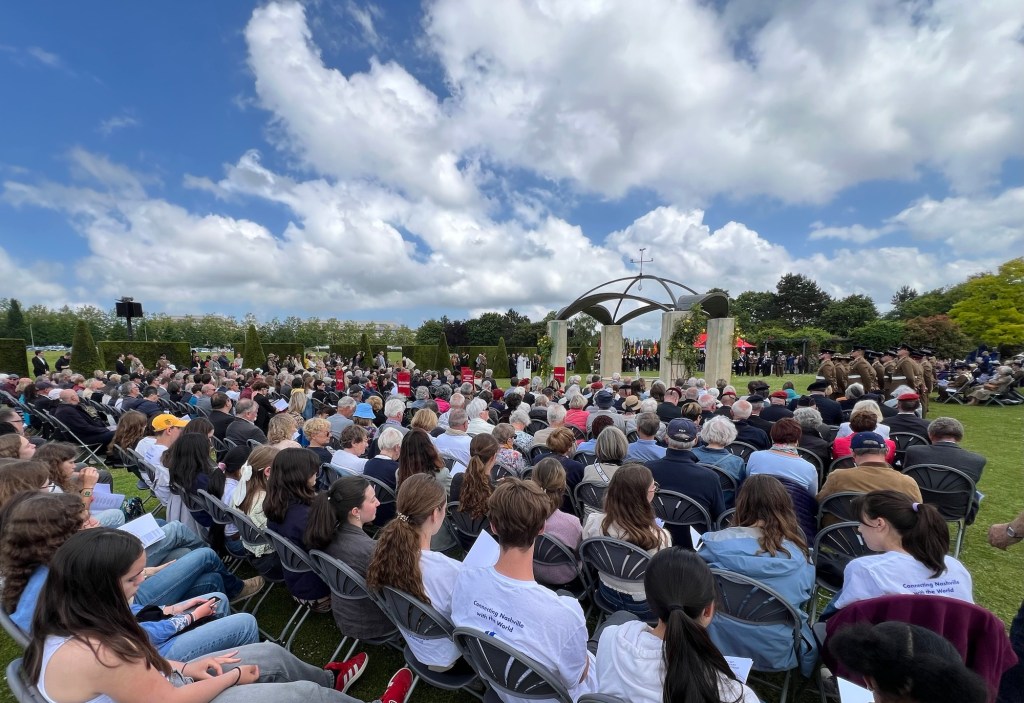
British Remembrance Ceremony at Caen Memorial 6 June 2024. ‘We gather not to celebrate war but to seek a continued peace.’
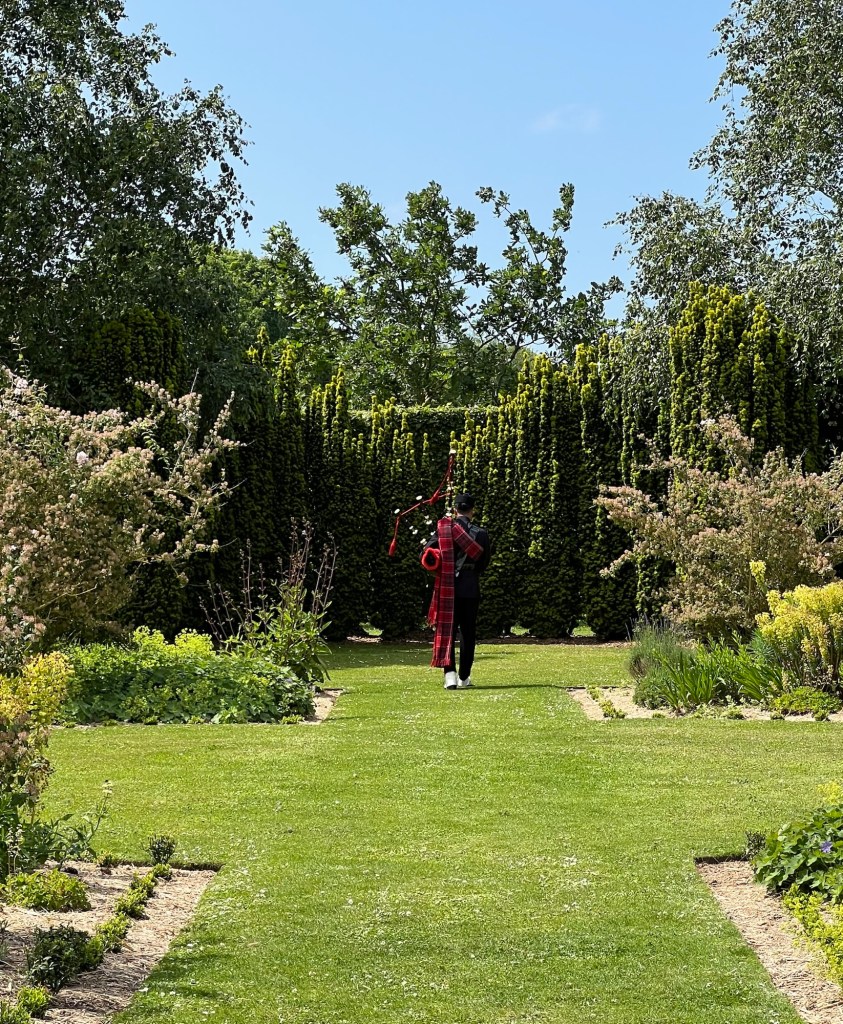
The Lone Piper walking away symbolizes the leading of the departed to the Hereafter, yet stopping short of Heaven’s Gate through which the piper cannot pass.
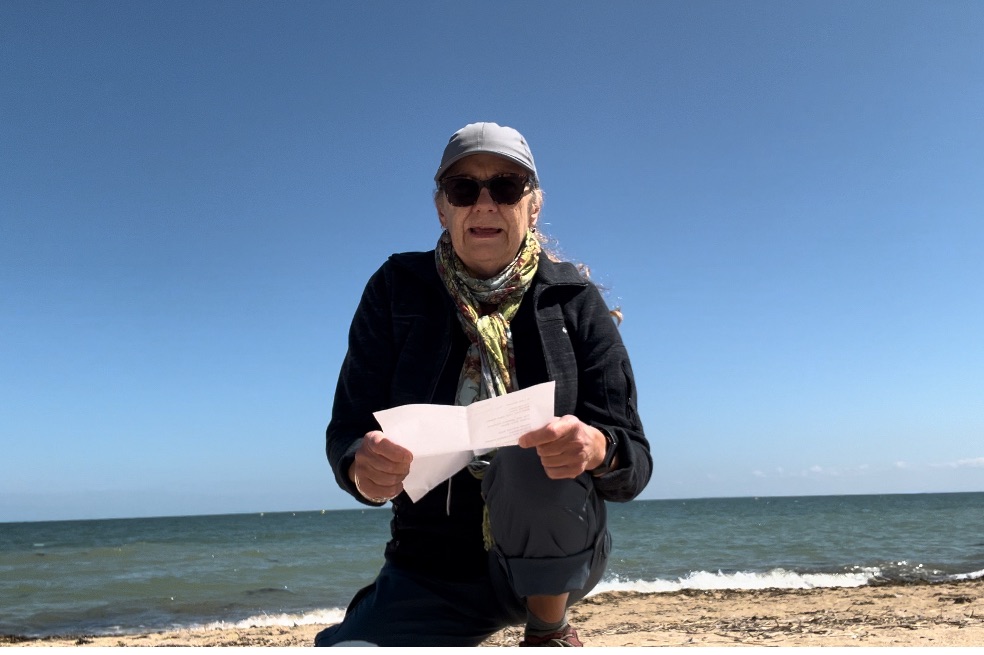
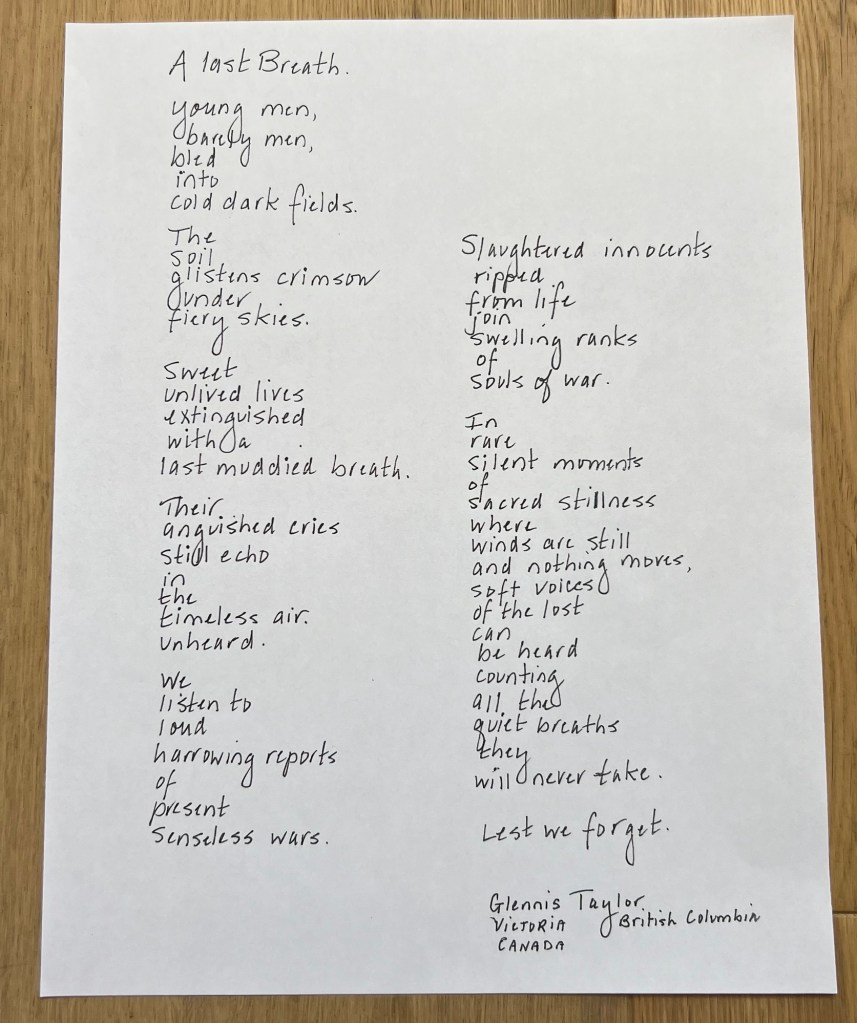
I am forever Grateful. I knelt down on the sands of Sword Beach to read this poem aloud written by cousin Glennis Taylor.
 Tea with Tanner ...somewhere
Leave a comment