
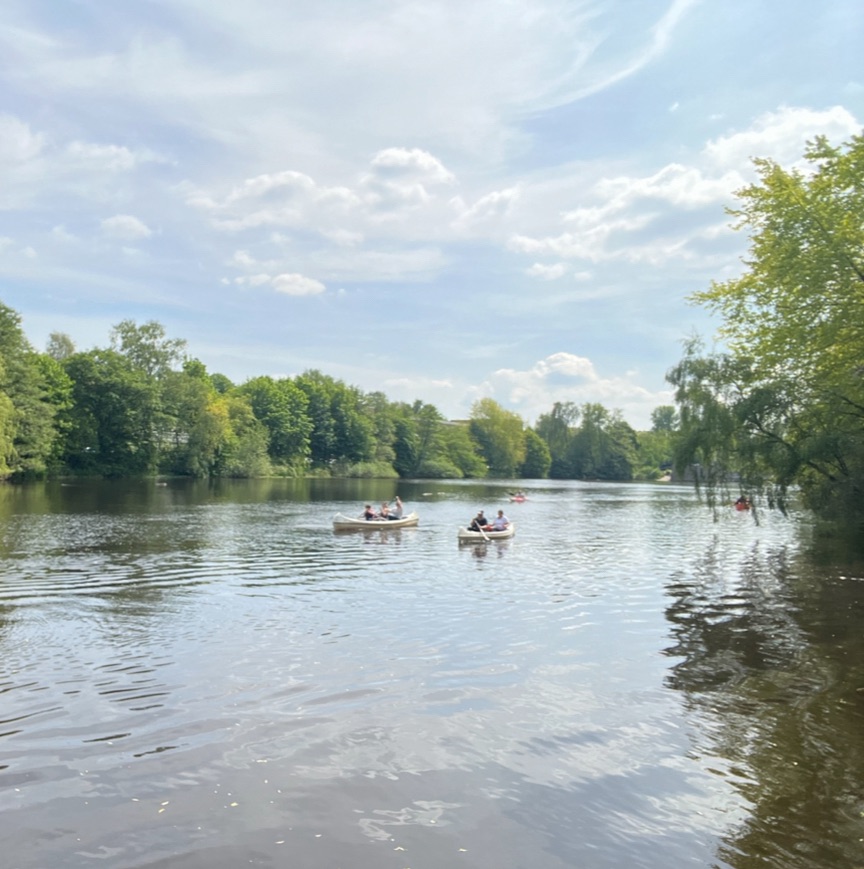
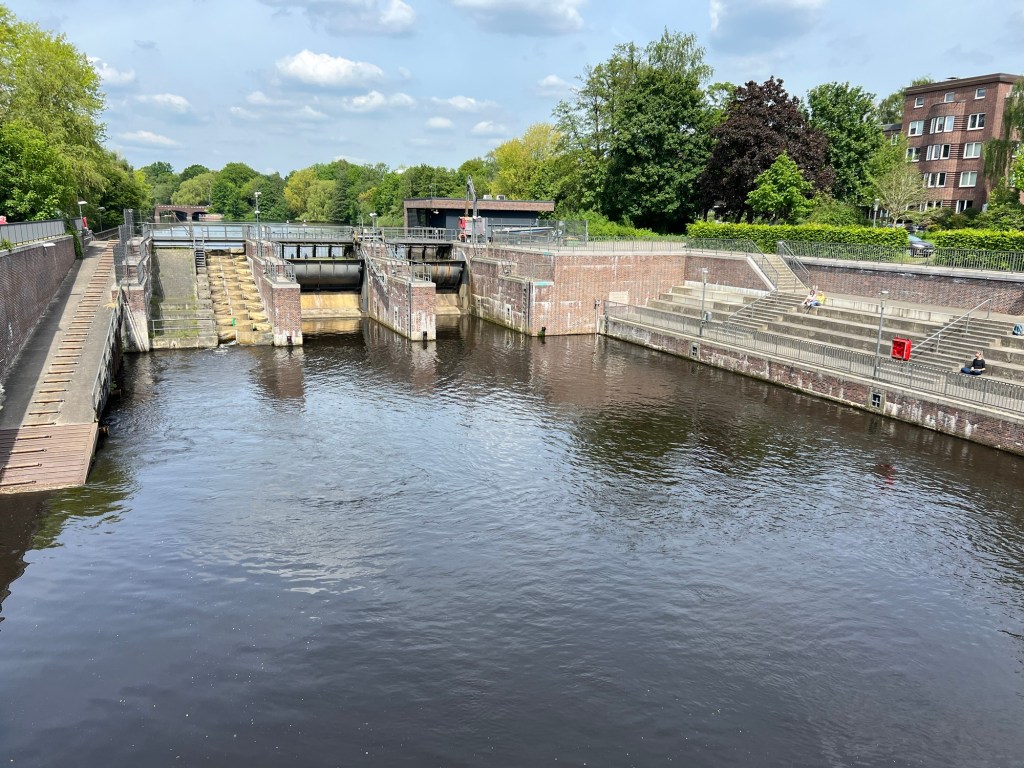
Hamburg was founded at the mouth of the Alster River in the 9th century and used it as a port. The Alster has been dammed since 1190, originally to power a watermill. In 1235 a further dam was built for a second mill, which changed the shape of the river to be like a lake. In the 15th and 16th century an Alster canal was built to connect hamburg with Lubeck.
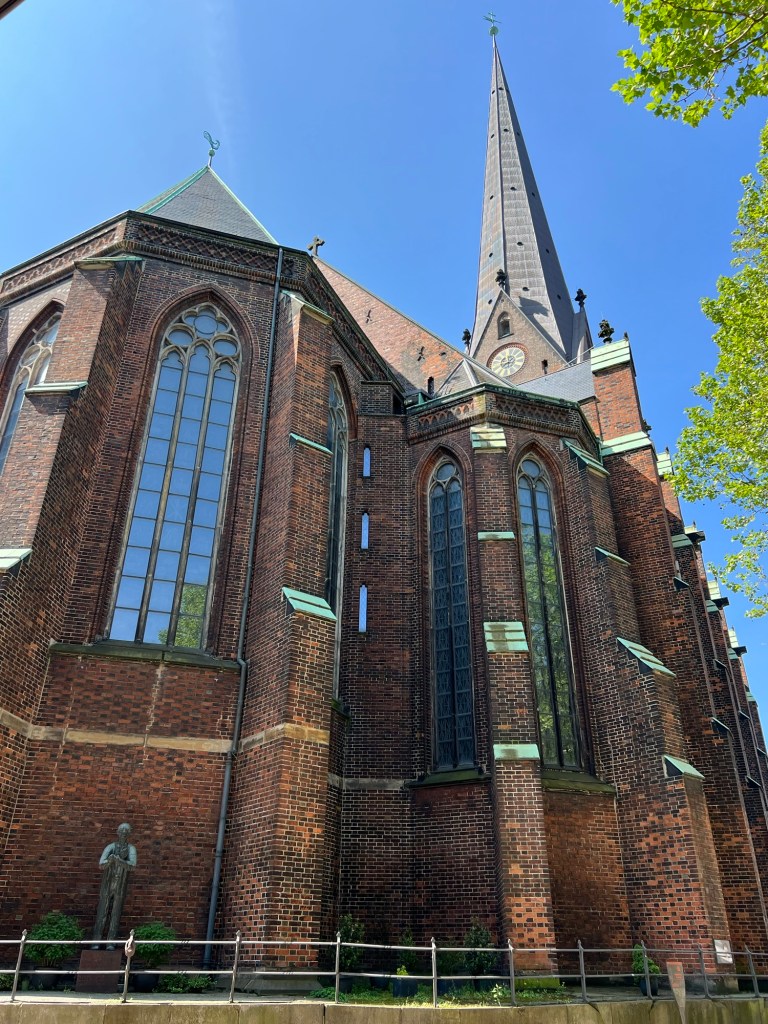
St Petri church, named for the apostle Petrus, was built in the 11th century and is Hamburg’s oldest church. During the Great Fire of 1842 the Gothic church was entirely consumed by the flames then reconstructed seven years later. During WWll, in July of 1943, the air attacks of Operation Gomorrah cuased yet another massive fire in the city. Fortunately, this time the tower wasn’t seriously damaged though nearly half of the city was destroyed.
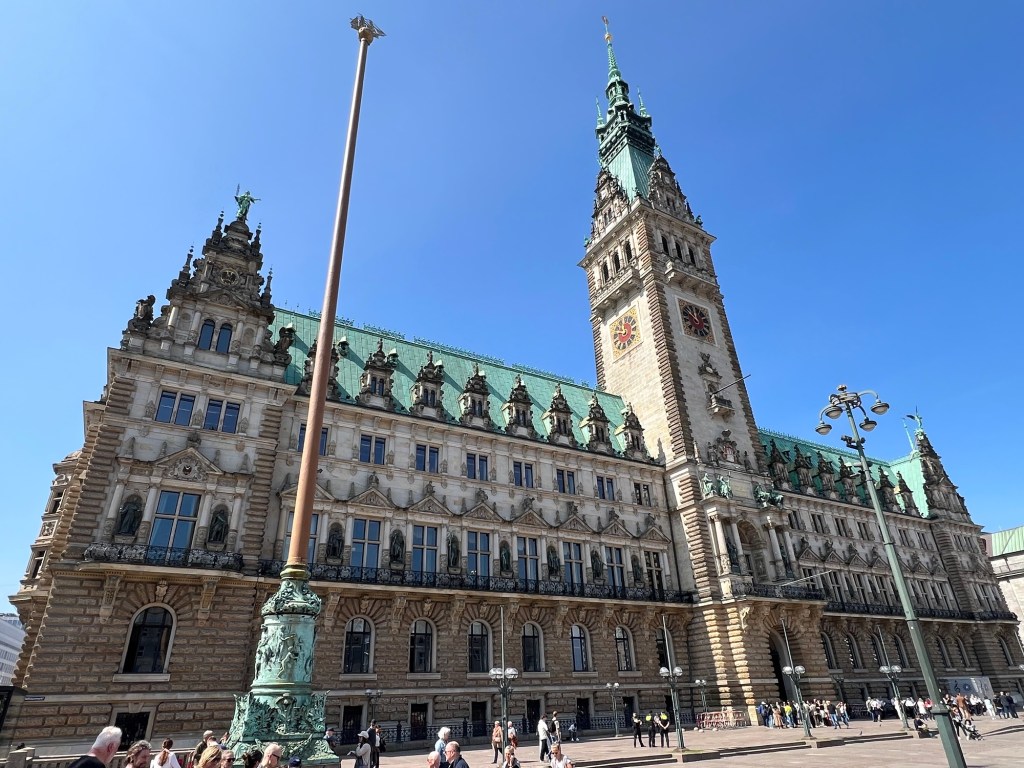
After the old city hall was destroyed in the Great fire of 1842, it took almost 44 years to build a new one. Built in a period of wealth and prosperity, in which the Kingdom of Prussia and its military defeated France in the Franco-German War and the German Empire was formed, the look of the new Hamburg Rathaus was intended to express this wealth and also the independence of the State of Hamburg and Hamburg’s republican traditions.
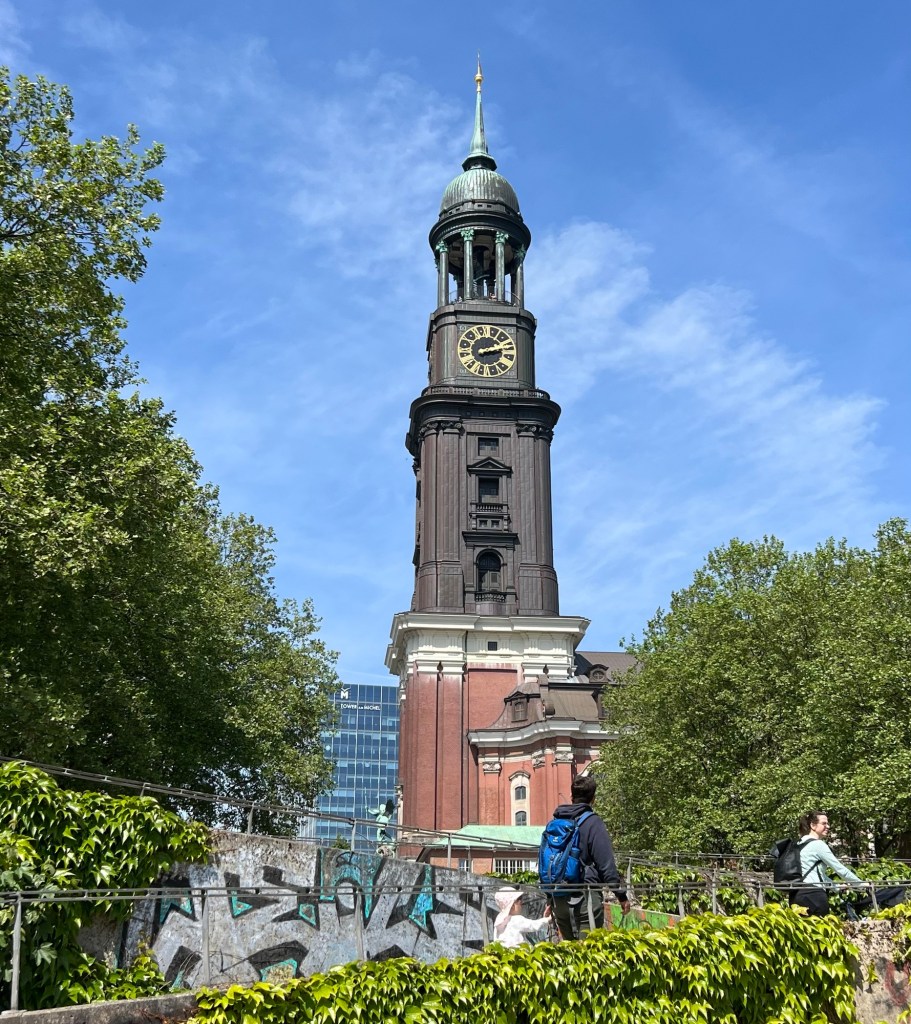
St Michaelis church is considered to be one of the finest Hanseatic Protestant baroque churches. The church was purposely built Protestant unlike many other Hamburg churches which were originally built by Roman Catholics and were converted to Protestantism during the Reformation. It is dedicated to the Archangel Michael. The 132 metre high spire is totally covered with copper and has been a landfall mark for ships sailing up the river Elbe.
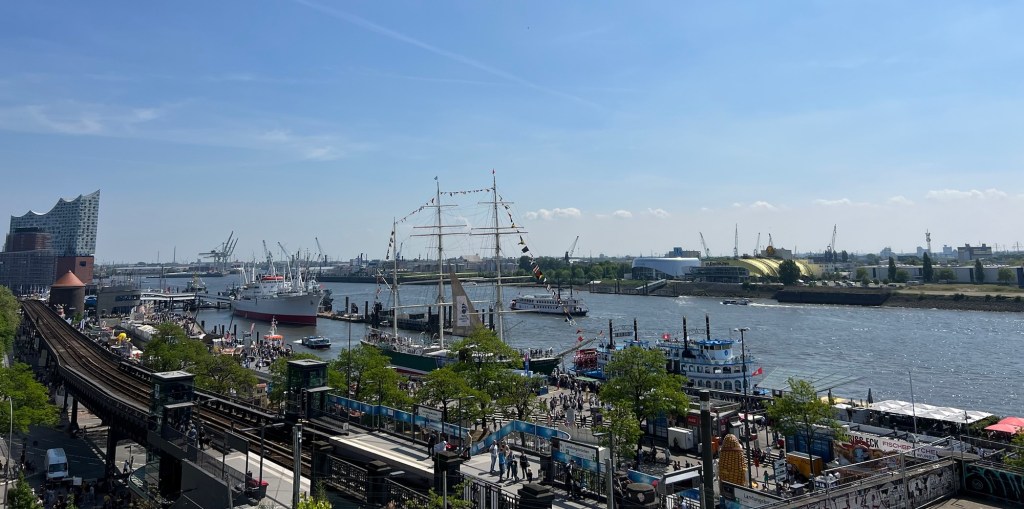
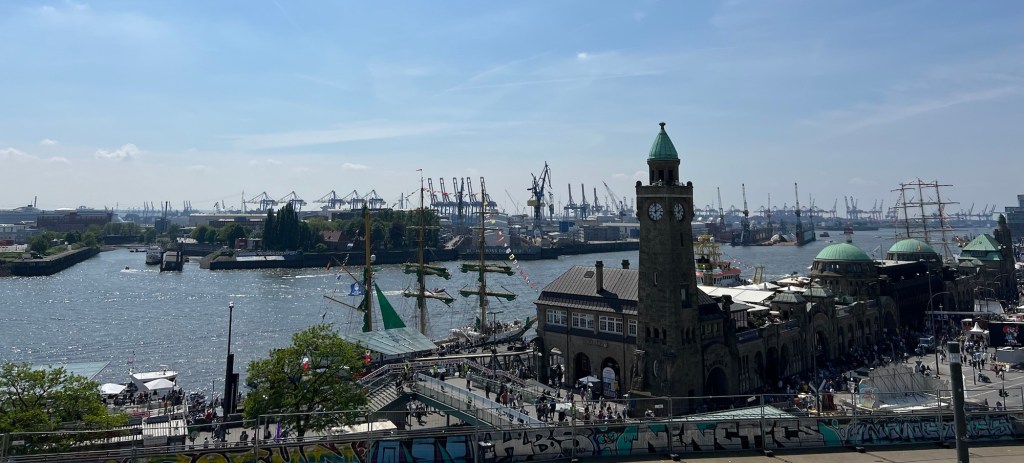
Hamburg Port, founded 7 May 1189 by Frederick l. During the partition of Germany between 1945 and 1990, the Port of Hamburg lost much of its hinterland and many of its trading connections. However, since German reunification, the fall of the Iron Curtain and European enlargement, Hamburg has made substantial ground as one of Europe’s prime logistics centres and as one of the world’s largest and busiest sea ports.
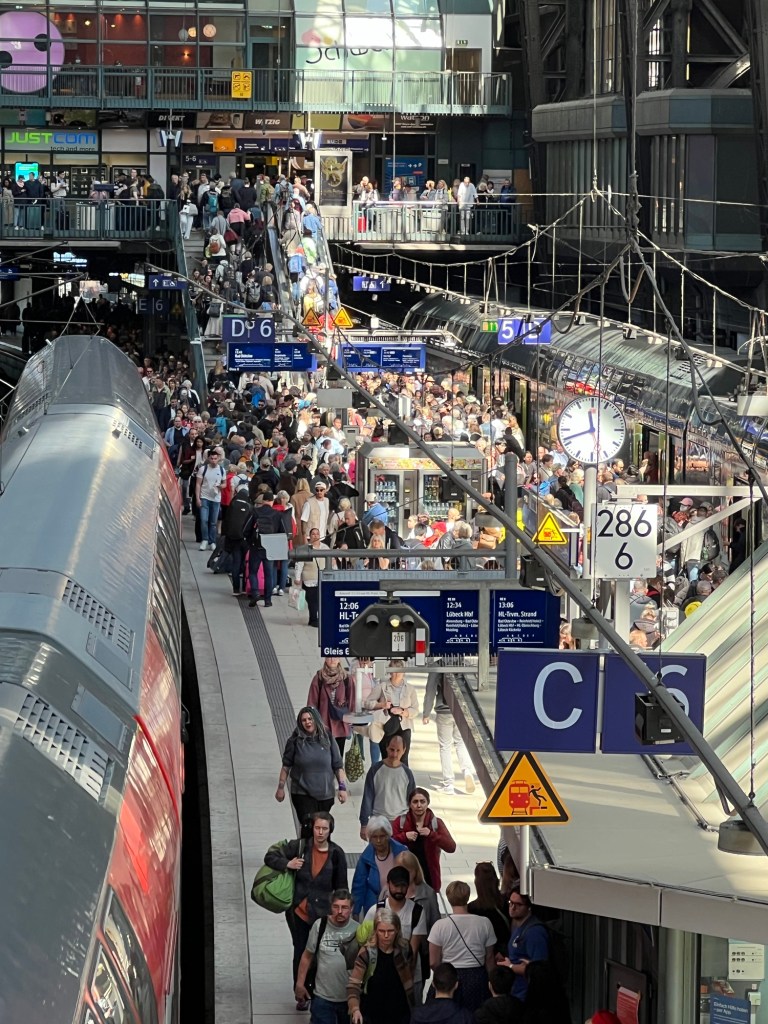

The above picture shows a wing of the central station with four platforms. Built between 1902 and 1906 it replaced several smaller stations located around the city centre. It has 20 island platforms (18 in usage). The Wandelhalle (Promenade hall) is a small shopping centre that includes restaurants, flower shops, kiosks, a gallery and more. Since 2008, in an effort to disperse drug dealers and users from the area, Deutsche Bahn has been playing classical music (e.g. Vivaldi’s Four Seasons). According to the German newspaper Hamburger Abendblatt this is a success. With an average of 550,000 passengers a day, it is Germany’s busiest railway station and the second-busiest in Europe after the Gare du Nord in Paris. I found navigating this station like being in a school of fish and diverting to a spot on the shore against the current. It is a most congested mass of scurrying people.
 Tea with Tanner ...somewhere
Leave a comment